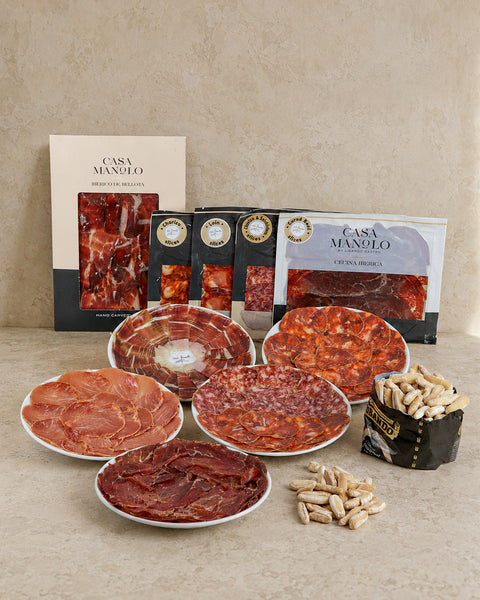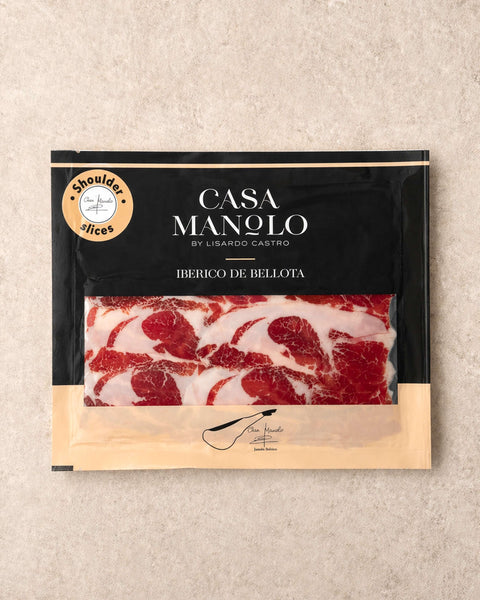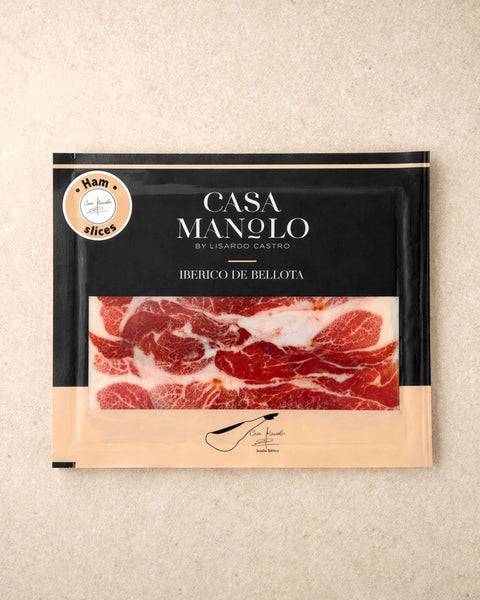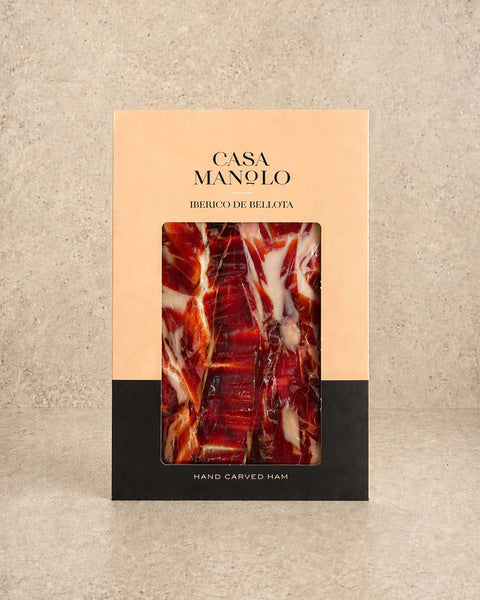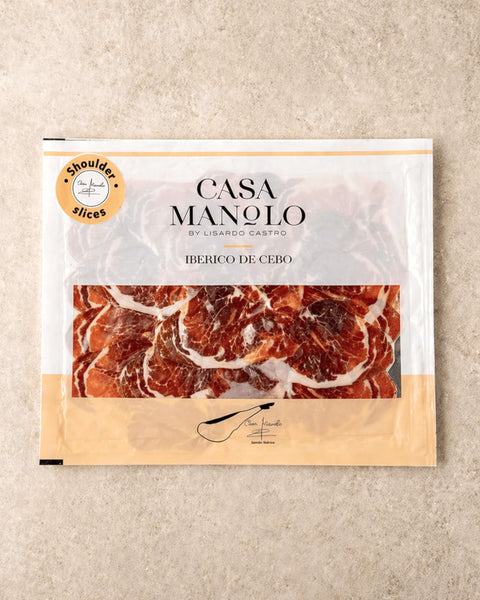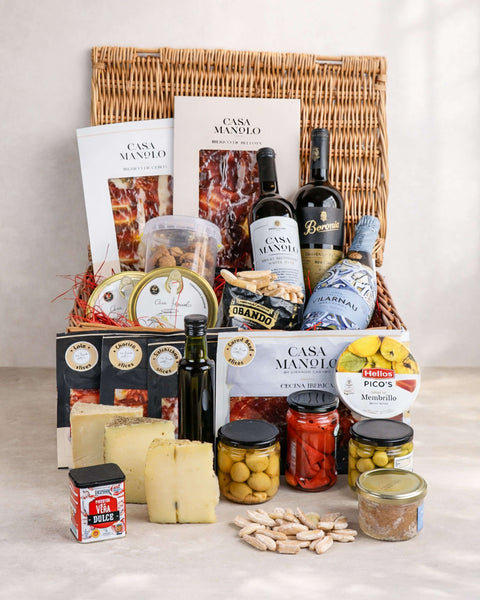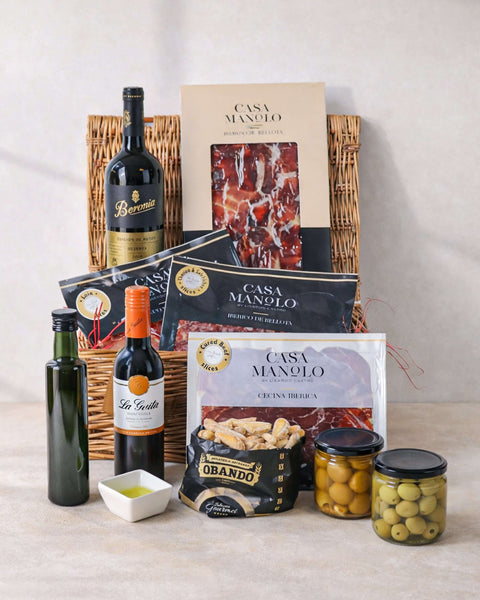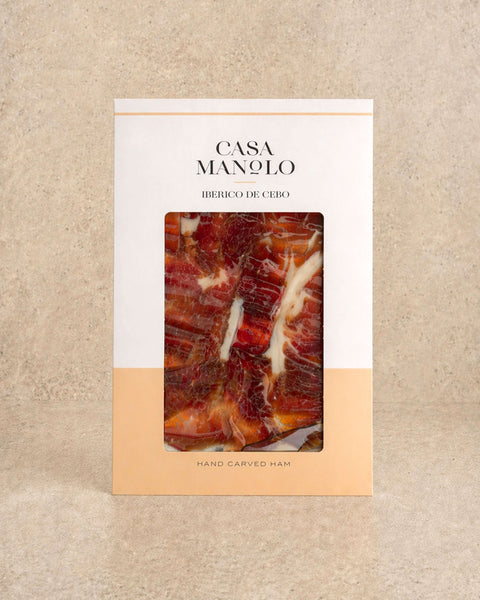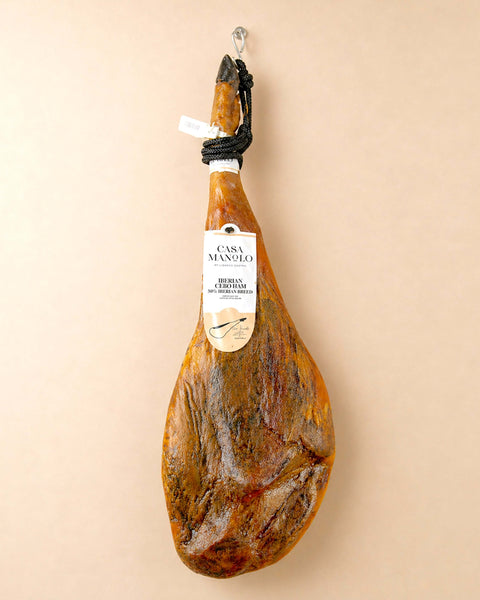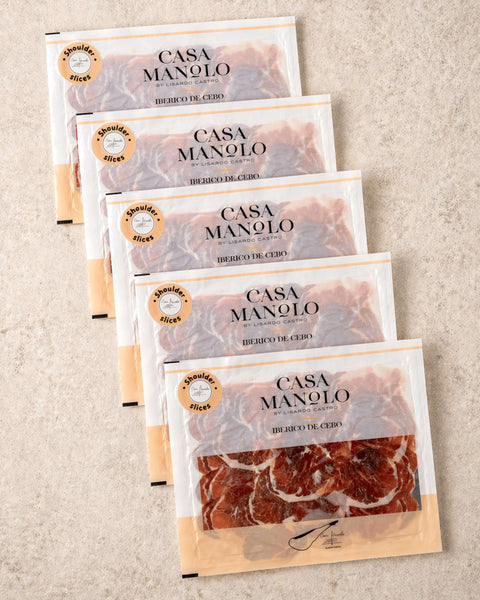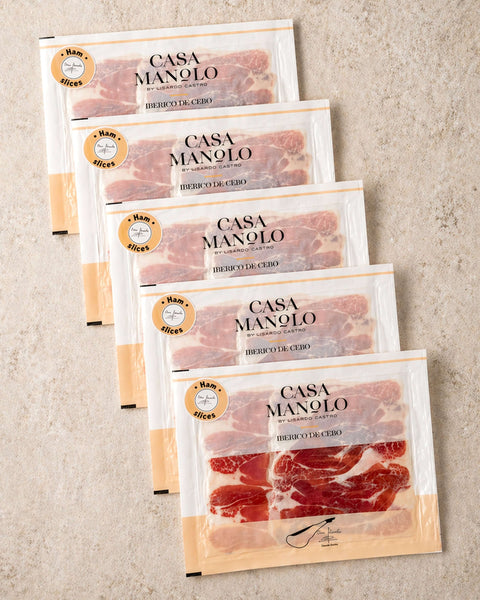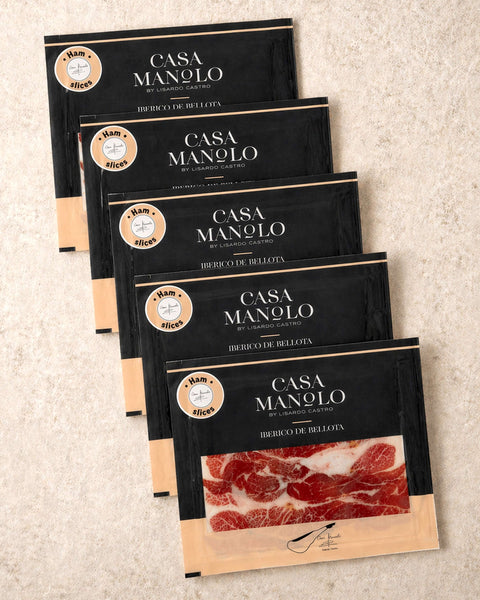
Bellota, Cebo and Pata Negra tell you different things about Ibérico ham. Once you separate feeding, breed and serving format, choosing becomes much easier.
Start with the full product description, then decide how you will serve it. A beautifully sliced pack can be a better fit for two people than a whole leg, however special the occasion.
| Term | What it tells you | Buying shortcut |
|---|---|---|
| Bellota | Acorns and natural pasture during the final montanera fattening period | Consider it when the ham is the focus |
| Cebo | Feed-based rearing; distinct from Cebo de Campo | A useful starting point for relaxed sharing |
| Cebo de Campo | Feed plus outdoor rearing under the standard | Check this wording separately from Cebo |
| Pata Negra | Reserved for Bellota 100% Ibérico | Look for the full designation, not just a dark hoof |
On a small screen, swipe or scroll across to compare.
Bellota: when the ham is the main event
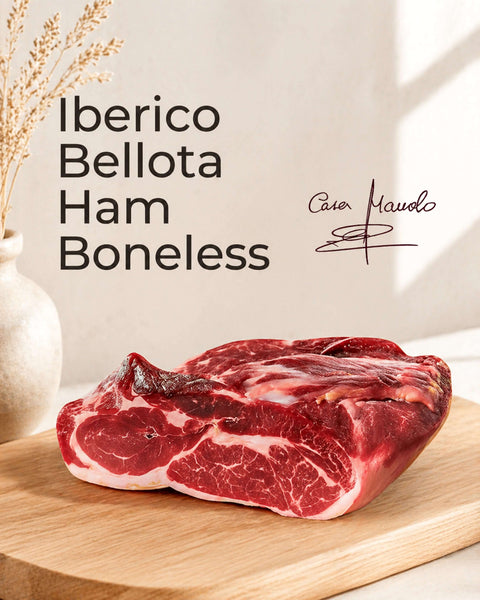
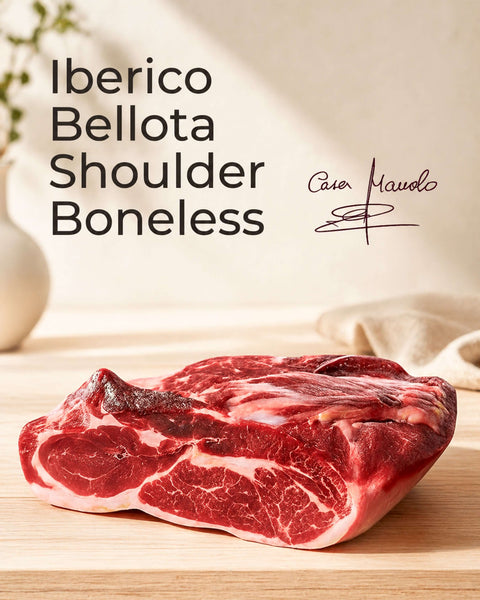
Bellota refers to the final feeding stage, rather than the percentage of Ibérico ancestry. A Bellota ham is not automatically 100% Ibérico. Read the breed percentage alongside the feeding designation.
For a tasting, a milestone gift or a small celebration, Bellota is a good place to focus your budget. Serve thin slices with bread or picos and leave room to appreciate the ham itself. Producer, curing and slicing all shape the result, so the label is a starting point rather than a complete tasting note.
Cebo: a practical choice for a fuller table
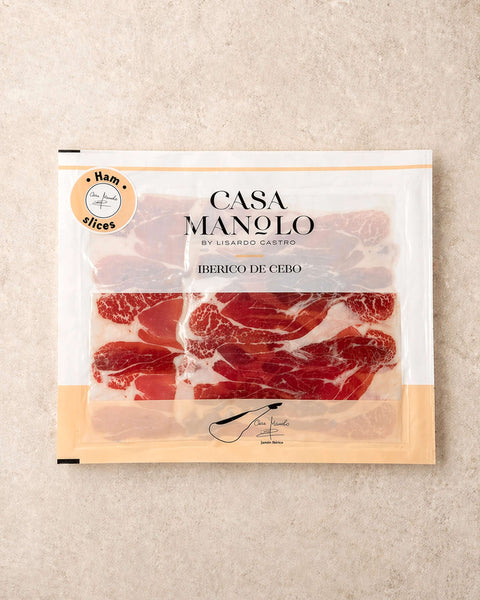
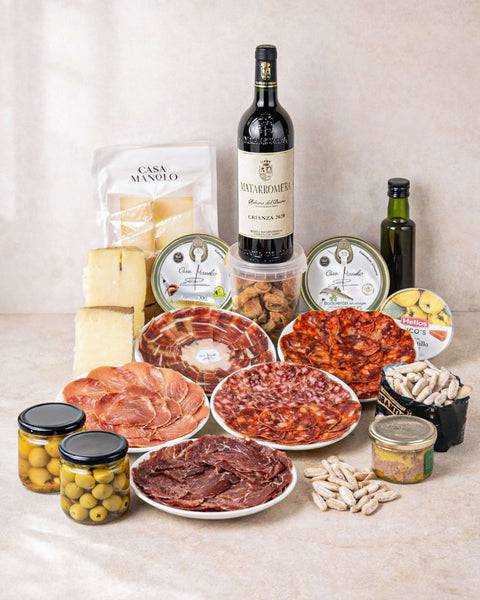
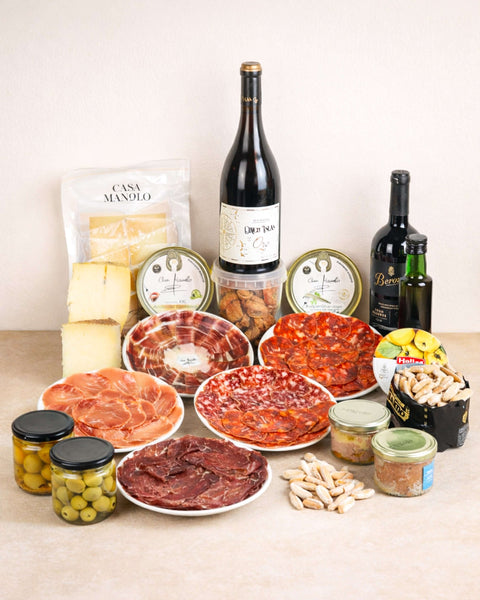
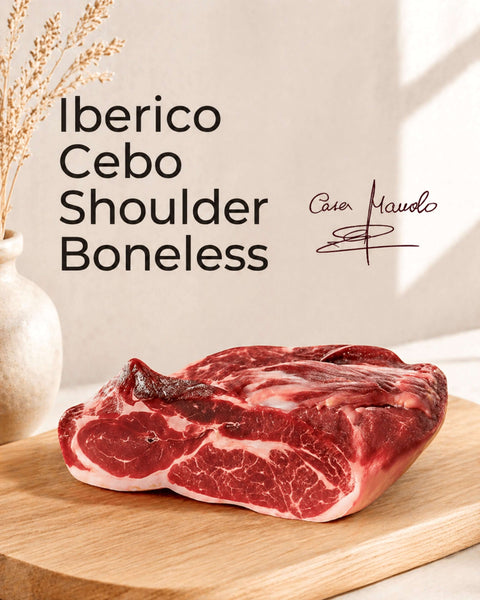
Cebo is often the more accessible choice when you are buying ham alongside cheese, chorizo and other tapas. Compare the price per 100g and the format, rather than assuming that the most expensive pack is the right one for every gathering.
Cebo de Campo is a separate designation. If outdoor rearing matters to your choice, check the precise classification rather than relying on a general phrase such as “free-range”. You can compare the current options in our Jamón Ibérico collection.
Pata Negra has a specific meaning
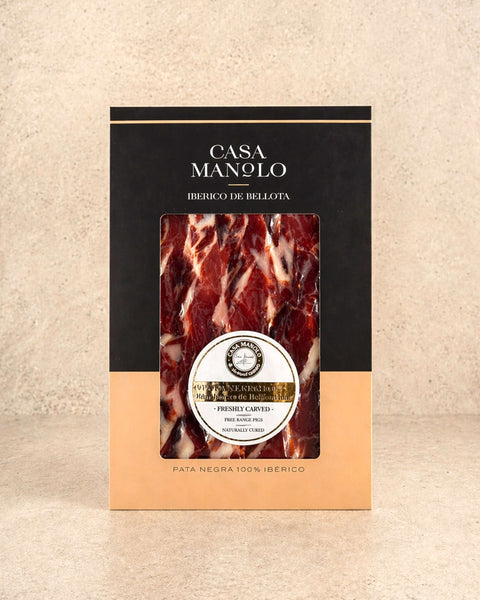
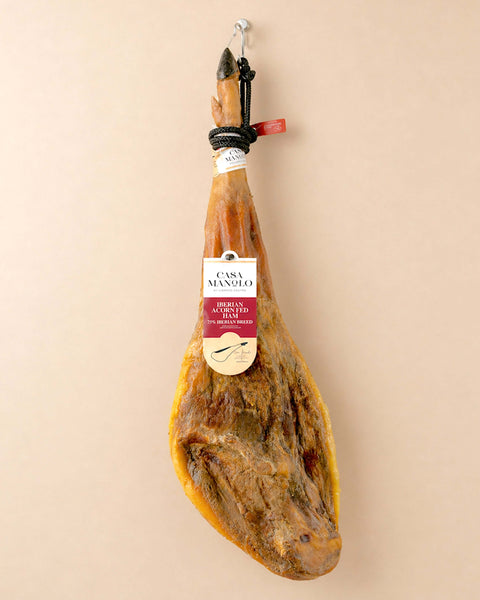
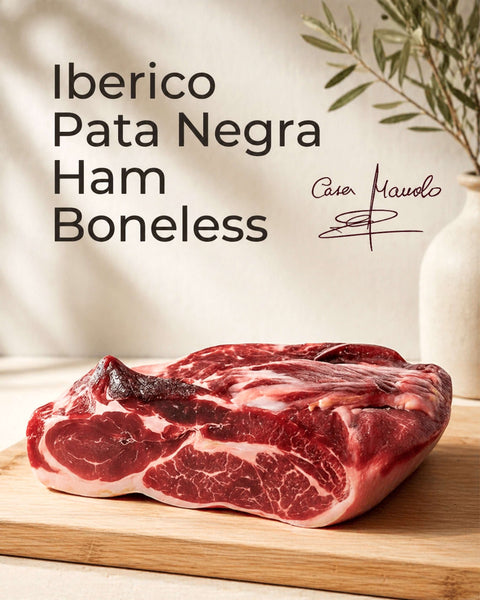
Under Spain’s Ibérico quality standard, “Pata Negra” is reserved for de bellota 100% ibérico. It is not simply a nickname for any expensive ham. A dark hoof alone does not establish the classification.
The official seals on whole hams and shoulders also distinguish the categories: black for Bellota 100% Ibérico, red for other permitted Bellota Ibérico breed percentages, green for Cebo de Campo and white for Cebo. These are classification colours, not a substitute for reading the label.
Compare three Ibérico options
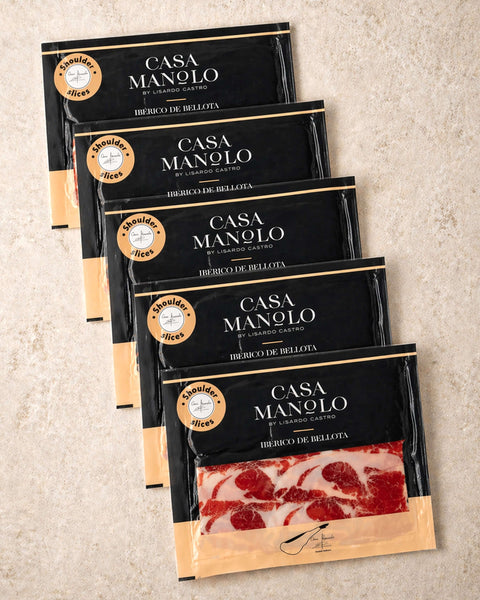
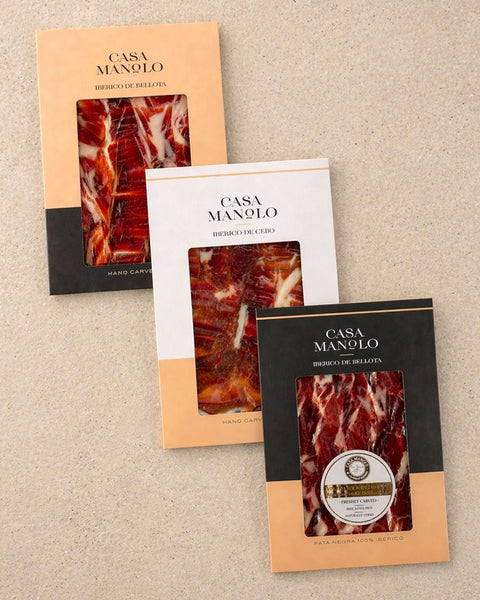
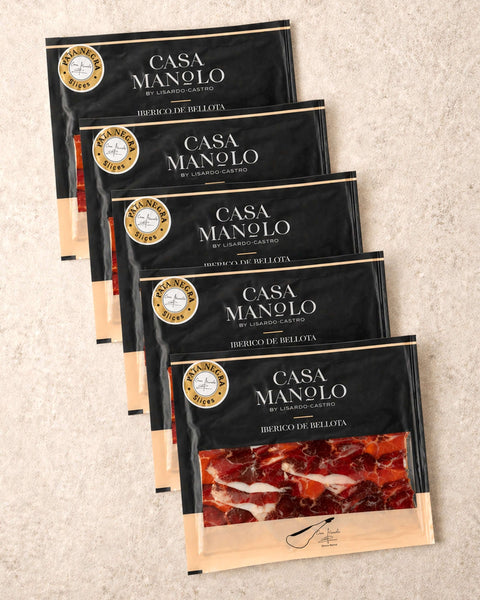
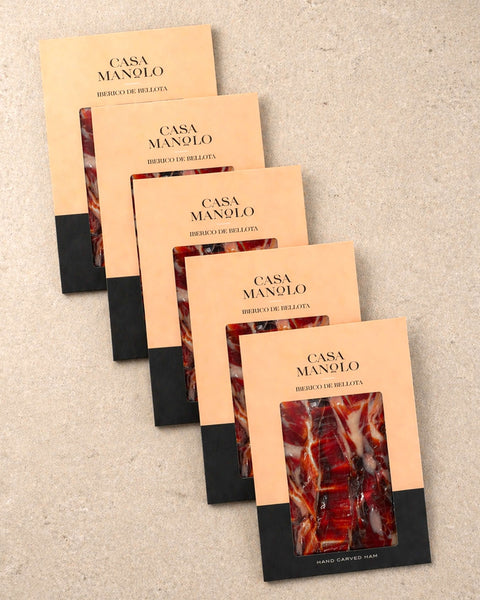
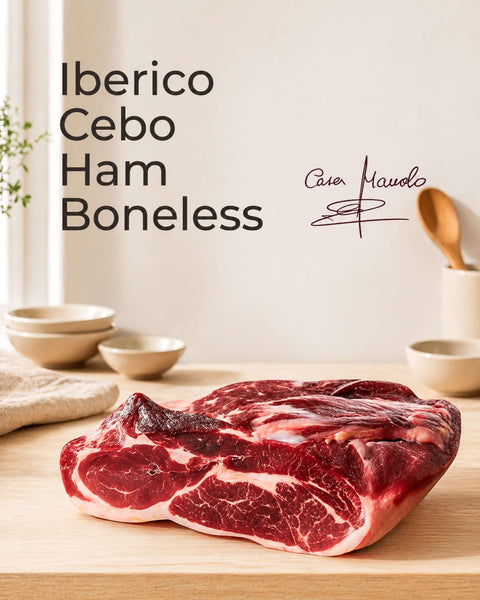
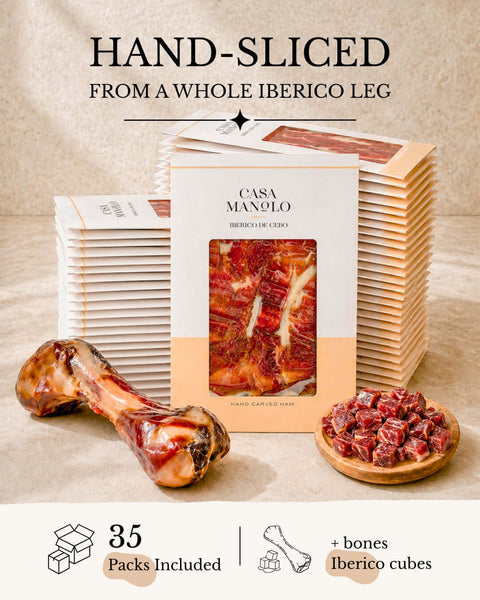
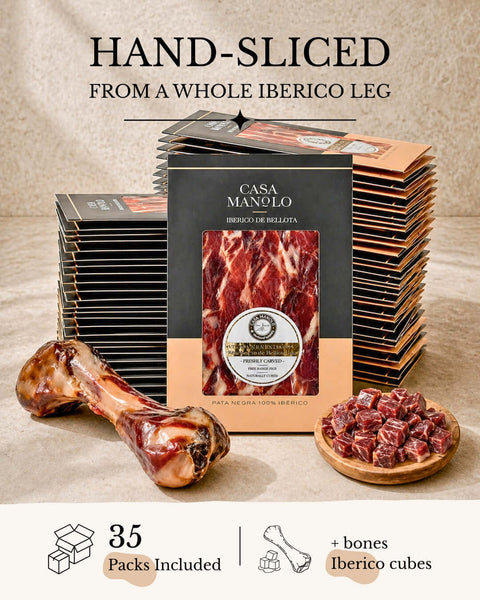
 Iberico Bellota Ham
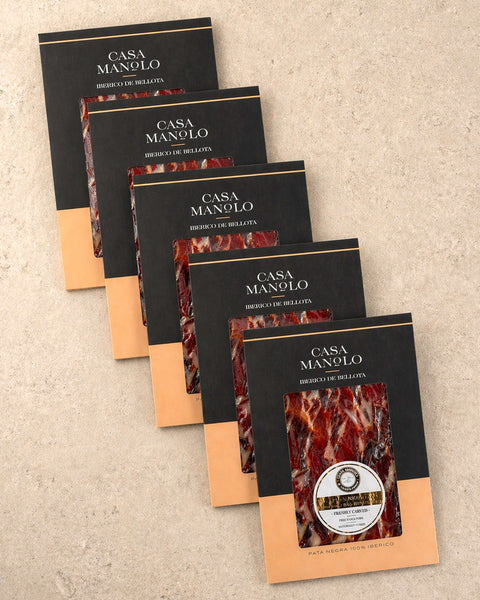
 Iberico Cebo Ham
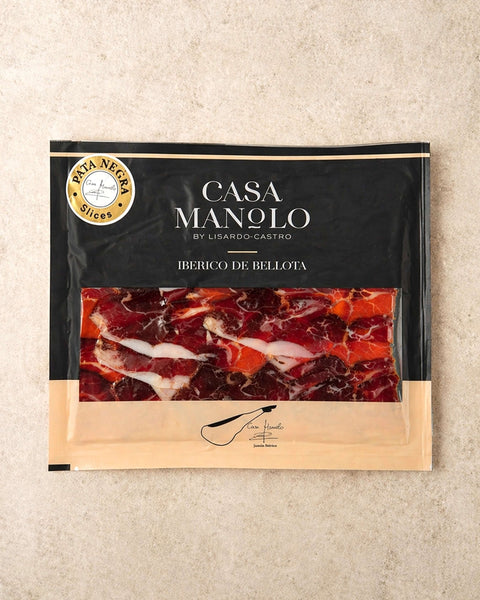
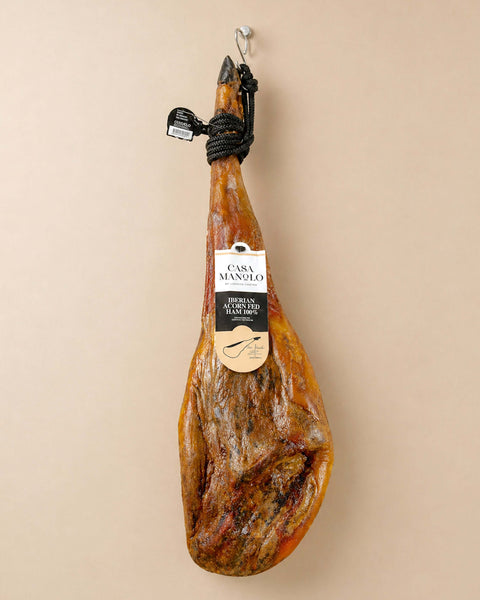
 100% Pata Negra Ham
Choose the format you will actually enjoy
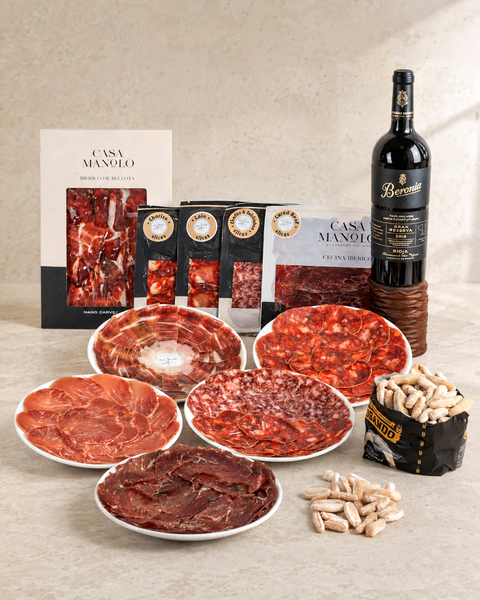
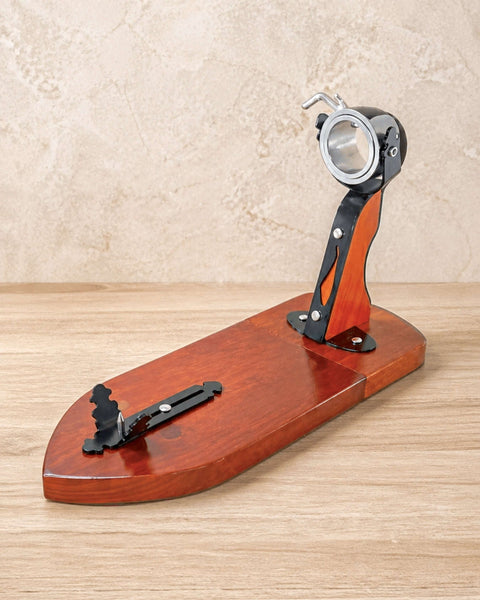
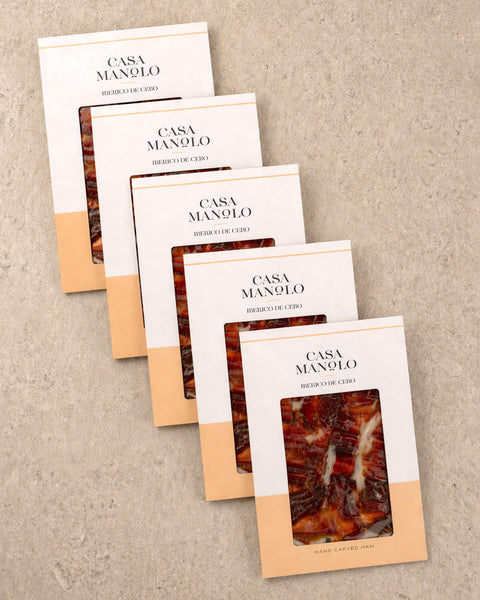
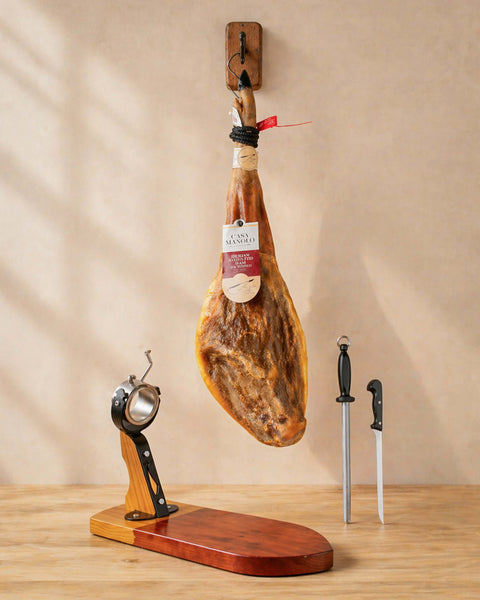
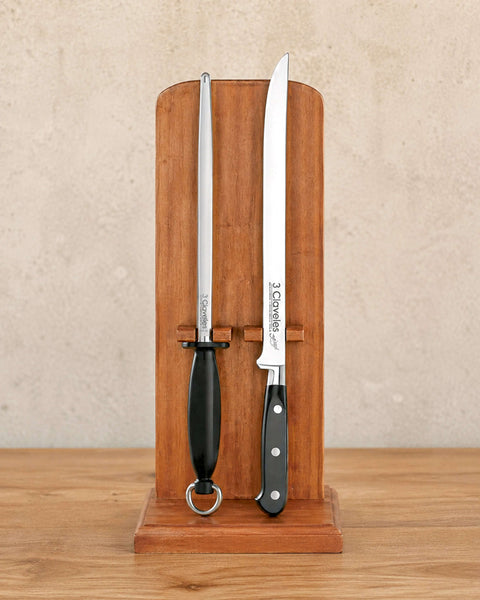
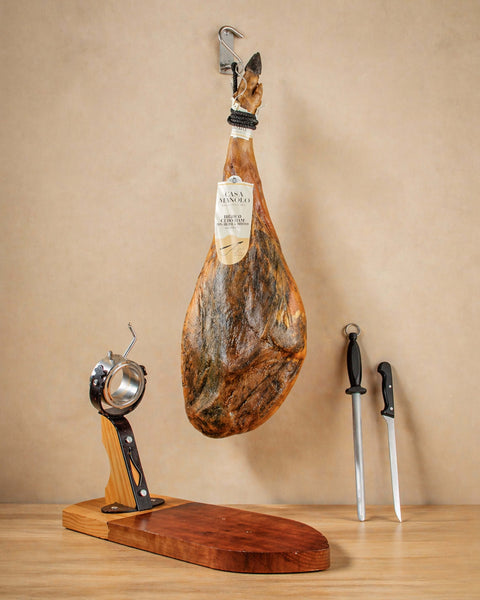
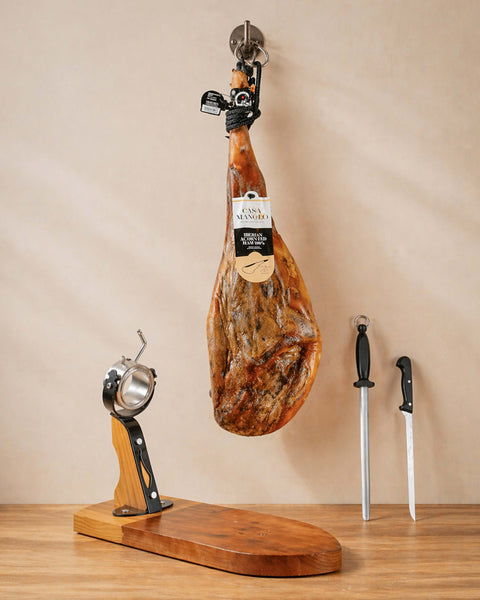
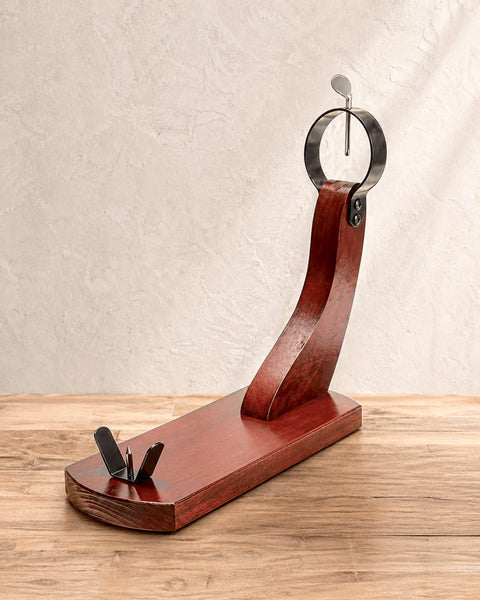
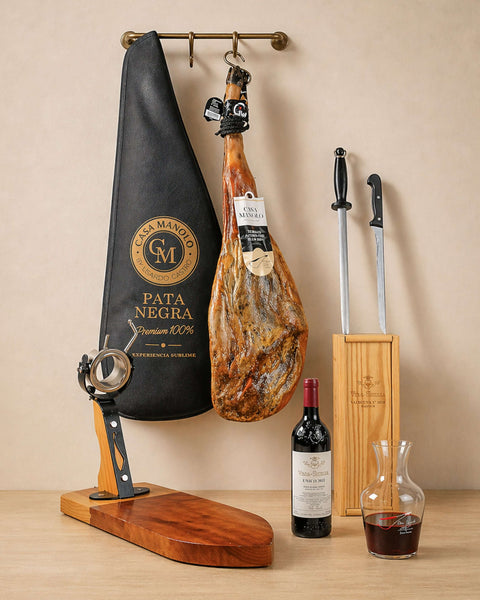
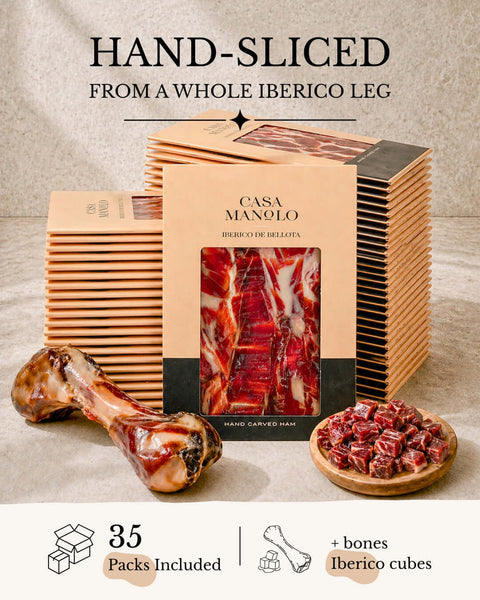
Sliced packs keep serving straightforward: check the pack weight, storage instructions and whether the slicing style suits you. A whole leg makes sense when you want to carve, have the equipment and expect to serve it regularly.
If you are comparing styles for the first time, a small tasting is more useful than guessing from price alone. Try each ham on its own before adding strong accompaniments.
A quick check before you choose
Is all Bellota ham 100% Ibérico?
No. Feeding and breed percentage are separate parts of the designation. Read both on the product label.
Which is easiest for a first purchase?
Choose a sliced format in a quantity you can comfortably serve. Cebo can suit a mixed spread; Bellota suits a ham-focused tasting.
Should I choose by hoof colour?
No. Use the full classification and traceable product information. The words Pata Negra have a specific reserved meaning.
Keep exploring
Further reading: Spain’s Ibérico quality standard, Articles 3–4 and 9.