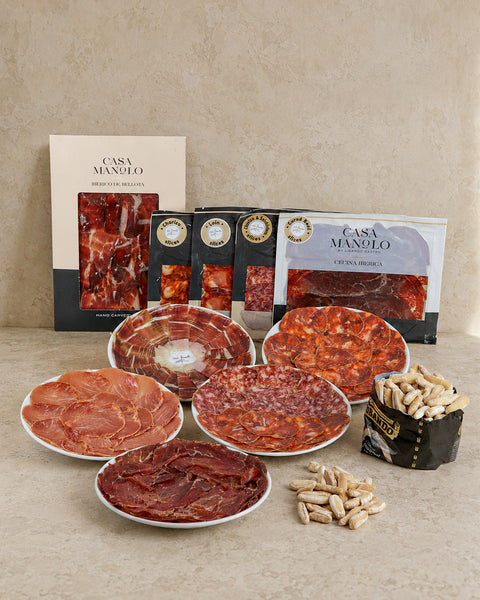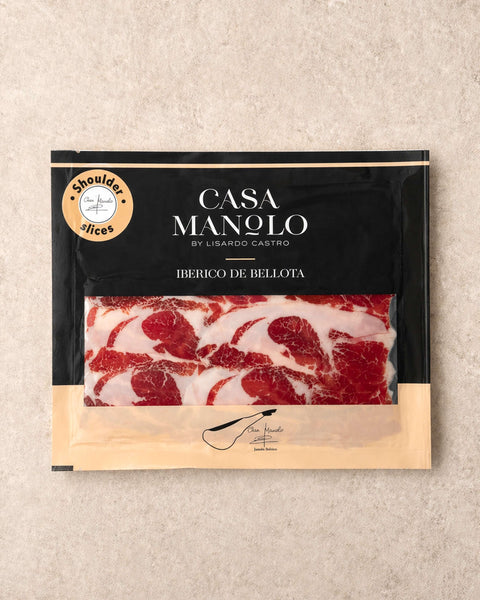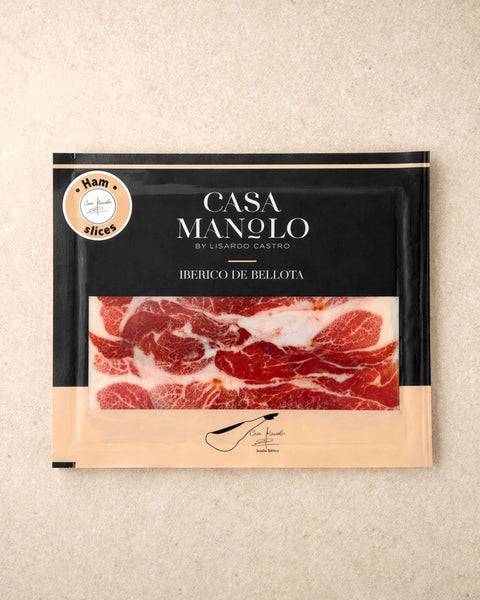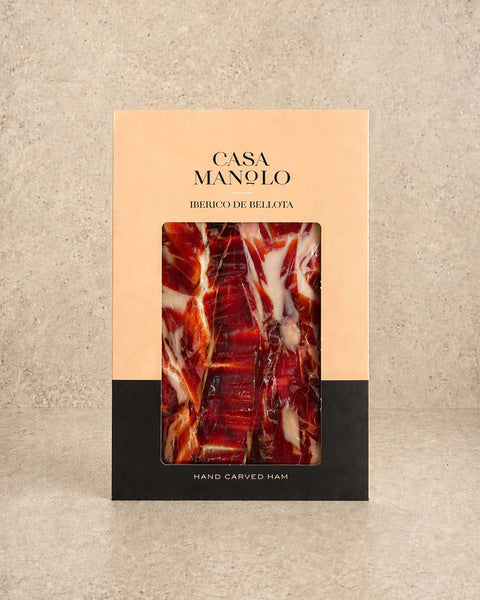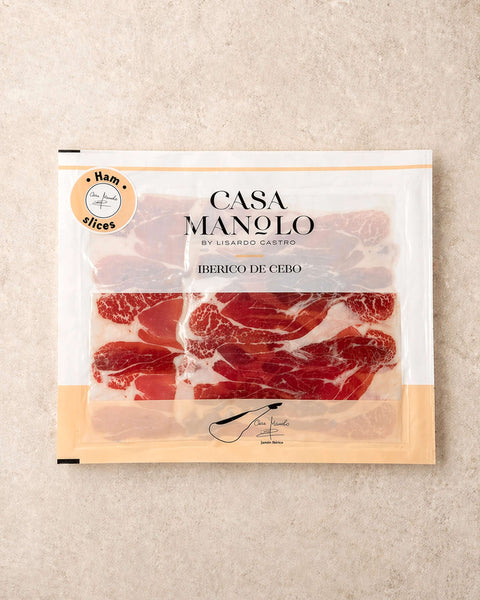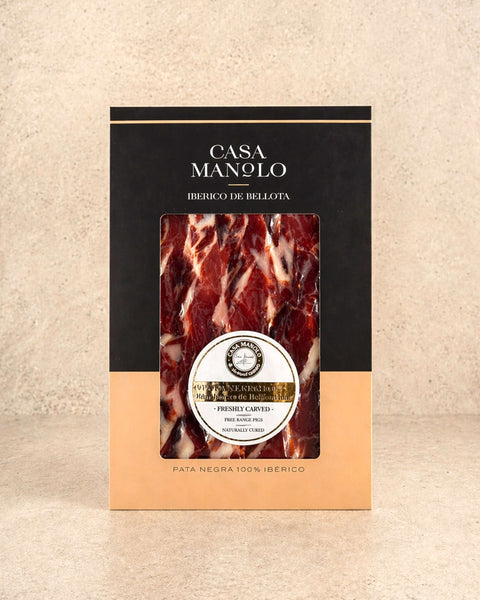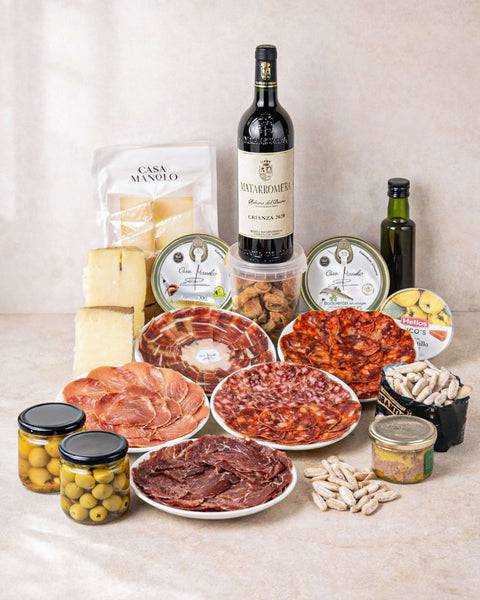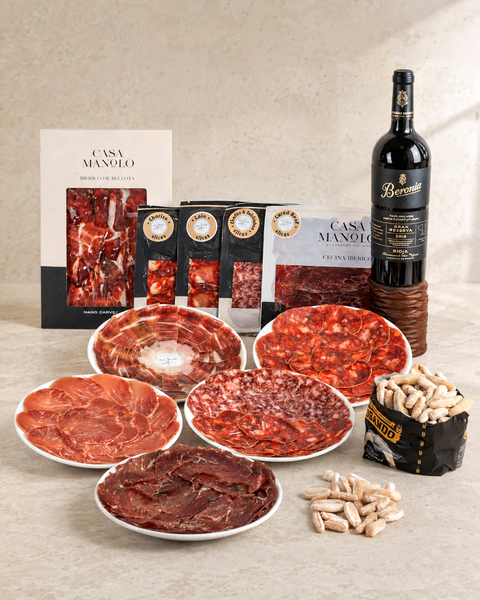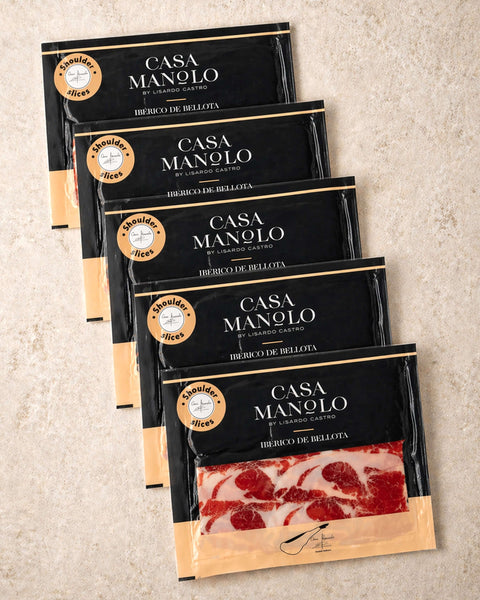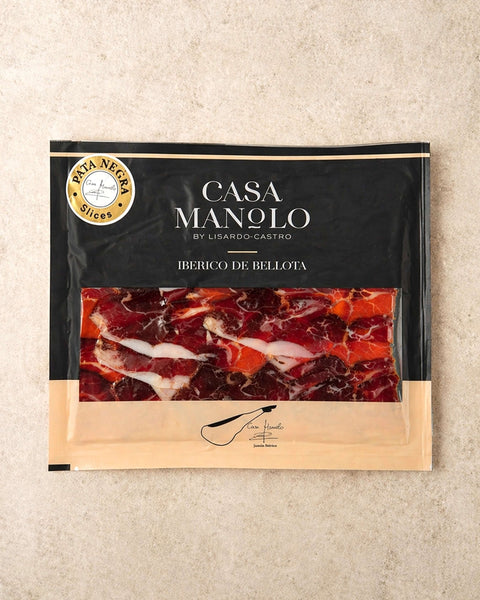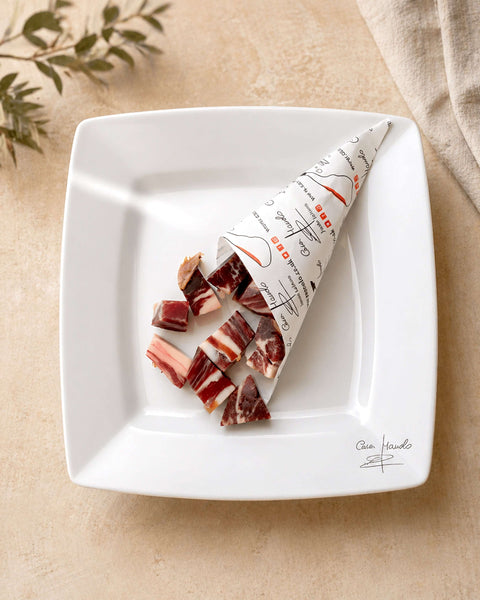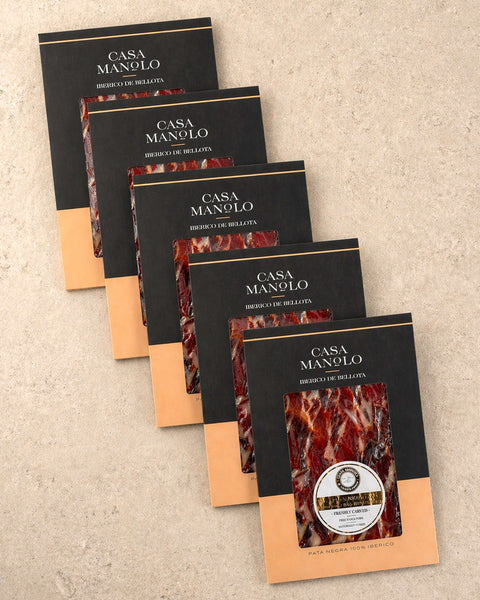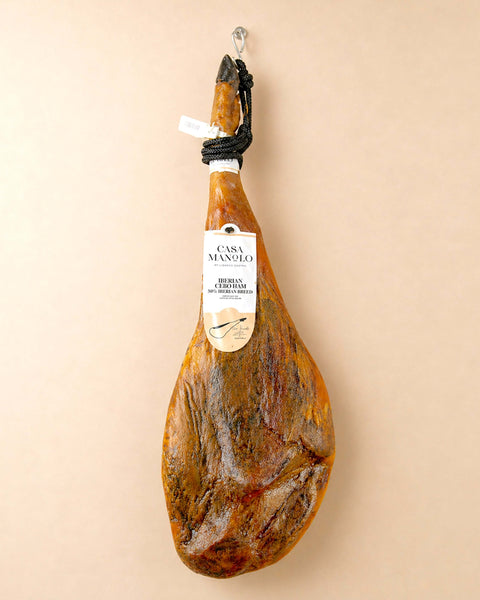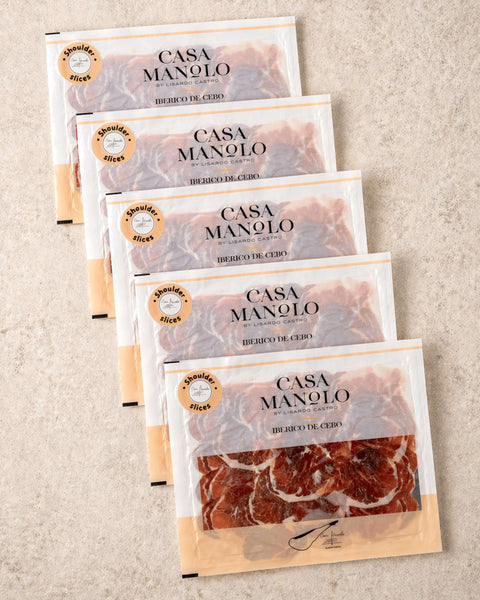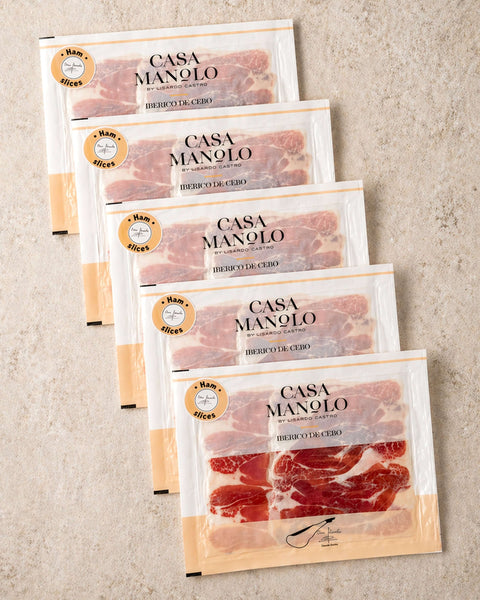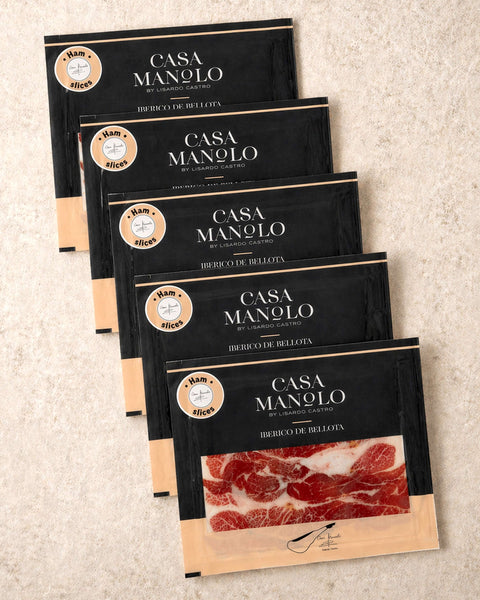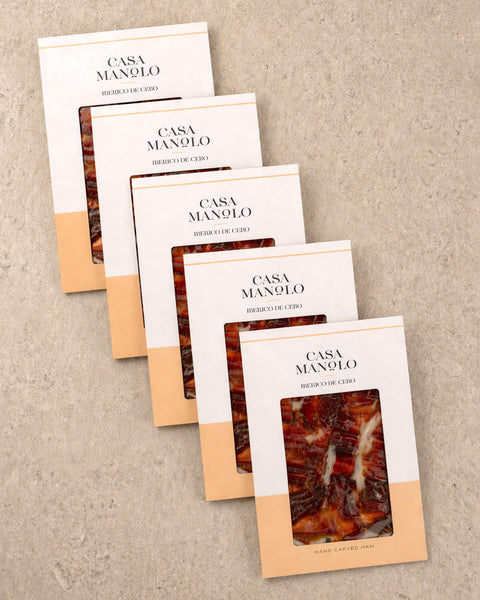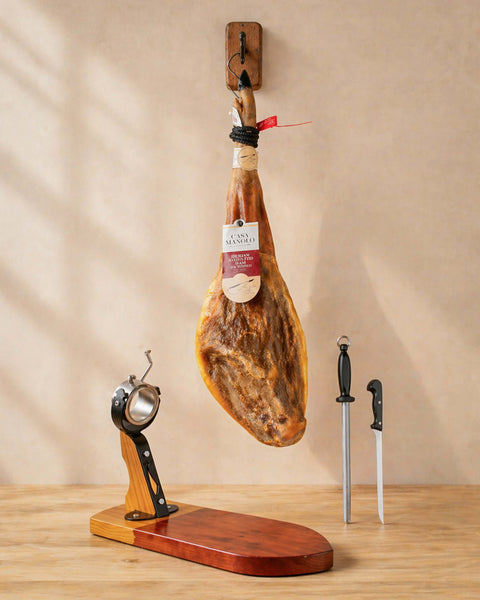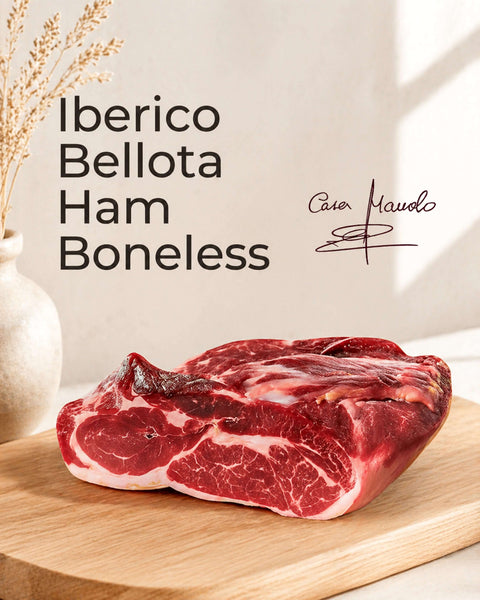
If your Spanish charcuterie choices always begin and end with pork, cecina opens another door. Cecina de León is cured beef, bringing a different texture and a savoury, lightly smoky character to the plate.
It deserves a first taste on its own. Comparing it with Jamón Ibérico is useful, but treating it as an imitation of ham misses what makes it interesting.
| Detail | Cecina de León | Jamón Ibérico |
|---|---|---|
| Meat | Beef | Pork |
| A useful tasting focus | Cured-beef depth and smoky notes | The ham’s texture, fat and curing character |
| An easy format | Thin, ready-to-serve slices | Thin, ready-to-serve slices |
| At the table | Try with bread or peppers | Try with bread and simple accompaniments |
On a small screen, swipe or scroll across to compare.
Start with the meat itself
The protected Cecina de León tradition is associated with cured beef from León. Its identity is different from the feeding and breed terminology used for Ibérico pork.
Casa Manolo’s sliced cecina is described as smoked beef. Taste for that character, but remember that producer, cut and curing all influence the final experience. A regional name is useful context, not a complete tasting note.
Notice the bite before adding anything
Lay out a few slices and separate them gently. Look at the grain and try a small piece plain. Compared with the softer fatty impression of some ham, cecina can offer a more distinctly meaty bite.
There is no need to drown it in oil. If you want a finishing drizzle, taste first and use a little. Too much dressing makes it harder to discover what you liked about the meat.
Pair it with a sweet or fresh contrast
Roasted piquillo peppers offer one simple direction. Bread with tomato is another. Both let you build a small plate without adding a second strong cured meat immediately.
For a cheese pairing, try a modest piece of Manchego and compare the combination with a plain slice of cecina. Keep the cheese small enough that it does not dominate every mouthful.
Make room for a new charcuterie flavour
 Cecina de León Slices 100g
 Piquillo Peppers
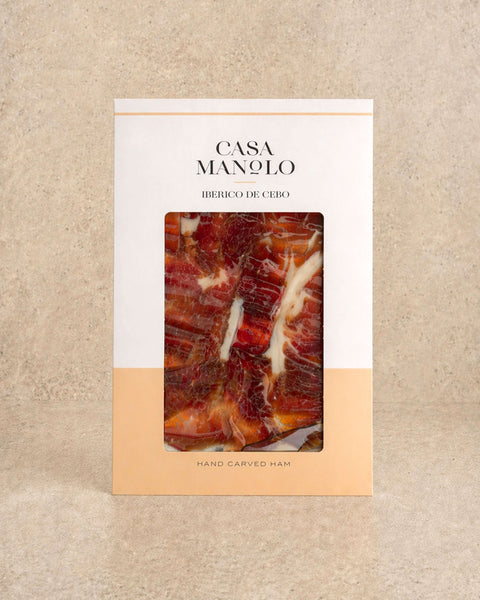
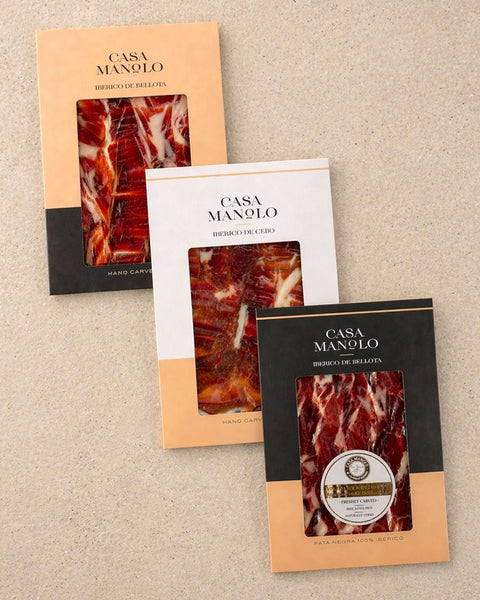
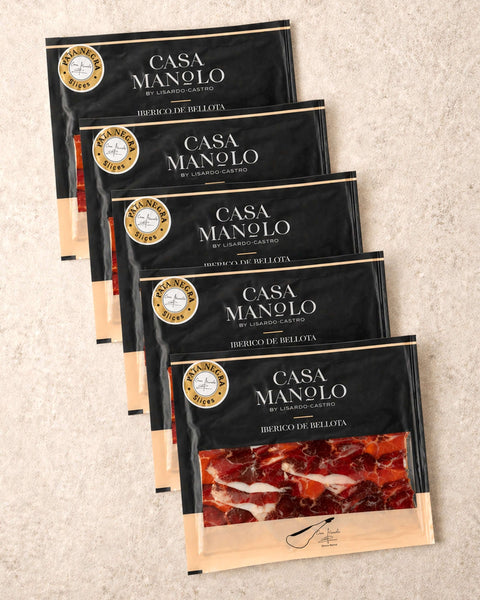
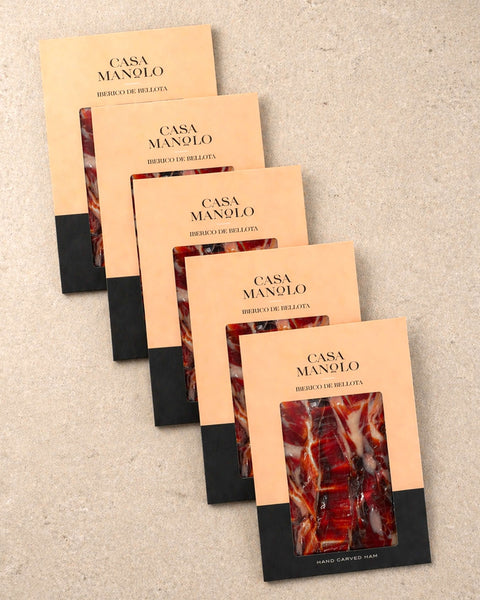
 Iberico Bellota Ham 100g
Use it in a sandwich thoughtfully
Cecina works well as the central flavour in a small crusty roll. Add a lightly dressed pepper or tomato, then stop before the sandwich becomes wet and difficult to eat.
Cut the meat into manageable pieces if long slices pull out with the first bite. A little attention to how the sandwich eats matters more than building a very tall filling.
Create a two-meat comparison
Serve a small amount of cecina and Jamón Ibérico on separate areas of a plate. Keep bread, water and any accompaniments the same for both, then notice which textures and flavours you prefer.
Although cecina is beef, that fact alone does not establish suitability for a particular religious or dietary requirement. Read the full ingredients and relevant certification if those details matter to your guests. Follow the pack’s storage instructions before and after opening.
A quick check before you choose
Is cecina a type of pork ham?
Cecina de León is cured beef. It has its own character and should not be confused with Jamón Ibérico.
Does it need lots of garnish?
No. Taste a slice first, then try one simple accompaniment such as bread or peppers.
Keep exploring
- How to Build a Spanish Charcuterie Board: What to Buy and How Much
- How to Store and Serve Spanish Cured Meats: Chorizo, Salchichón and Lomo
Further reading: Cecina de León’s protected tradition.