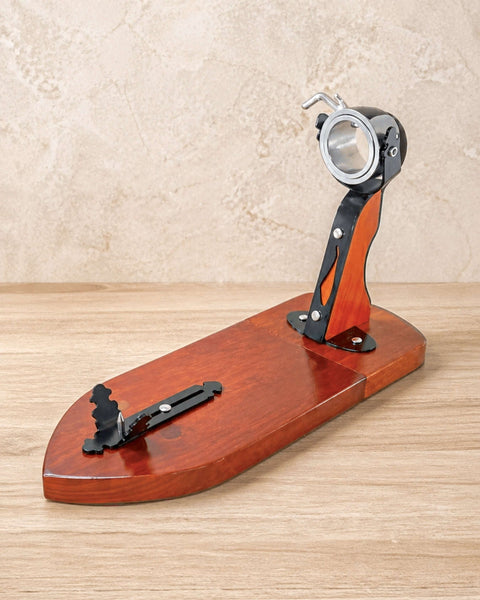
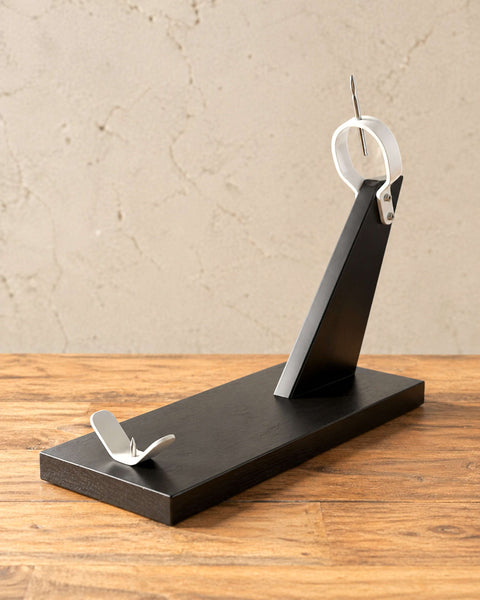
A jamón stand is safety equipment before it is presentation. The base must be stable, the clamps secure and the carving path clear.
Set everything up before exposing the cutting area, and keep the free hand away from the knife’s route.
| Check | Good setup | Risk |
|---|---|---|
| Base | Flat, stable surface | Rocking or overhanging edge. |
| Fixings | Tight and correctly positioned | Leg moving under pressure. |
| Knife path | Clear, controlled strokes | Hand or guest in front of blade. |
On a small screen, swipe or scroll across to compare.
Choose the work surface
Use a solid surface with comfortable height and good light. Clear bottles, plates and people from the carving side.
The surface should not rock, flex or force the carver to reach. Allow clear space beyond both ends of the stand and remove tablecloths that can slide. Good side lighting reveals the cutting plane, while a nearby plate lets slices be transferred without carrying the knife across the room.
Secure before cutting
Follow the stand instructions and test stability with both hands. If anything shifts, stop and reset.
Read the stand instructions before mounting the jamón and identify every clamp, spike and locking point. Tighten in the recommended order, then apply gentle pressure from several directions. If the base lifts or the leg rotates unexpectedly, correct the setup before unwrapping the knife.
Before the knife moves
- Base flat.
- Clamp tight.
- Knife sharp and undamaged.
- Free hand behind blade.
- Children and guests outside carving zone.
Carving essentials
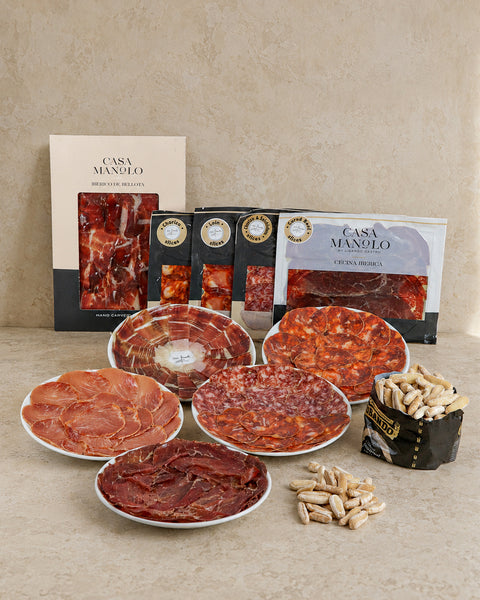
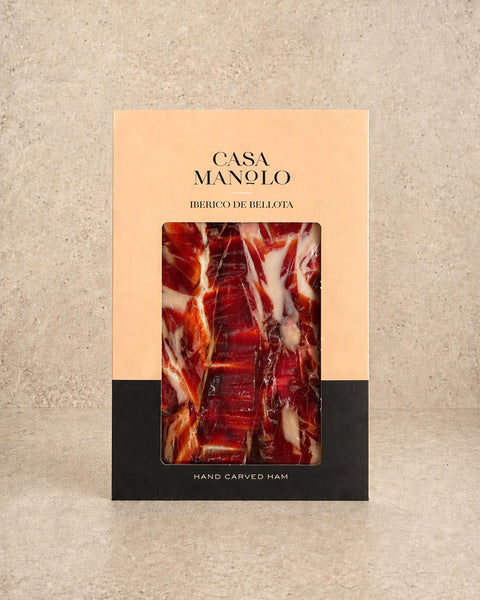
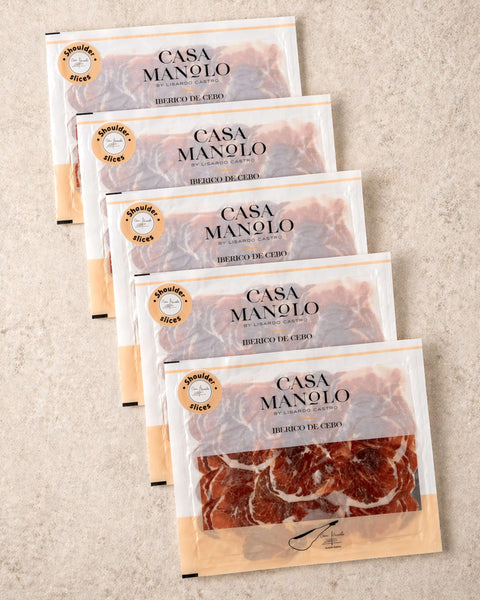
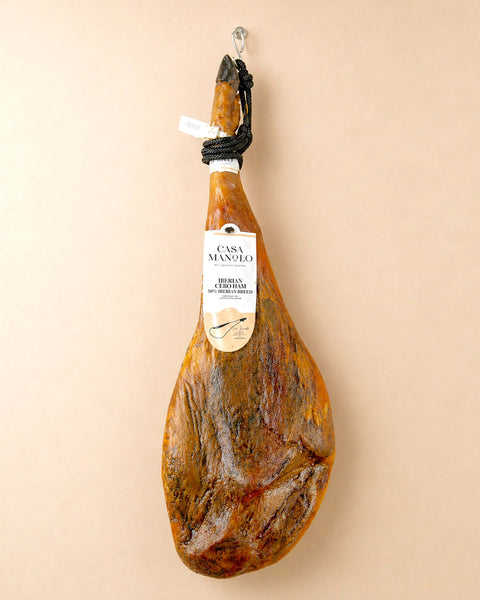
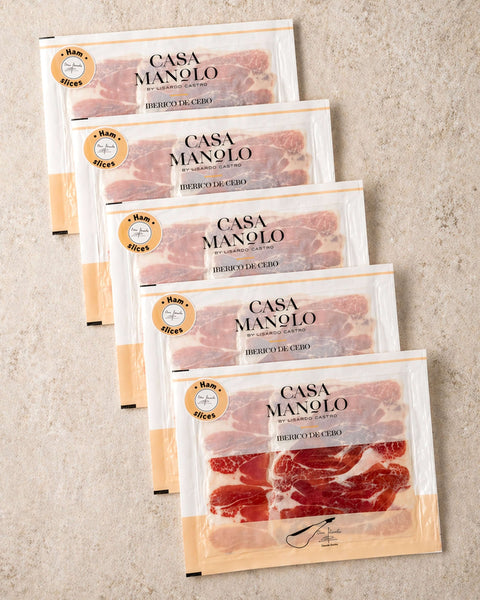
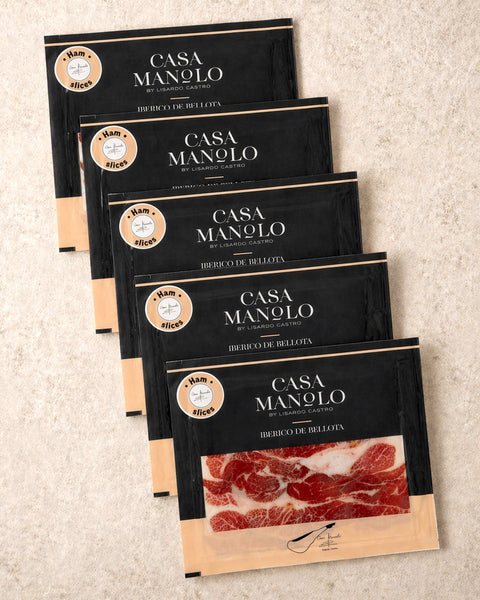
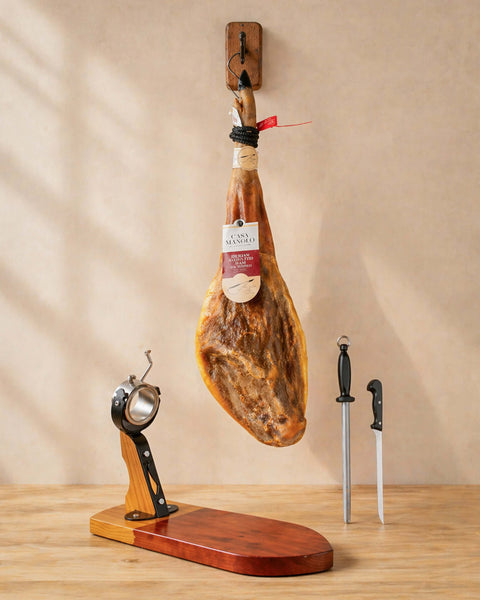
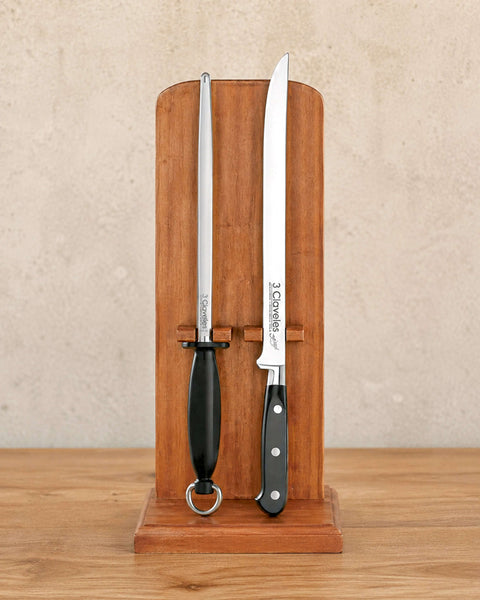
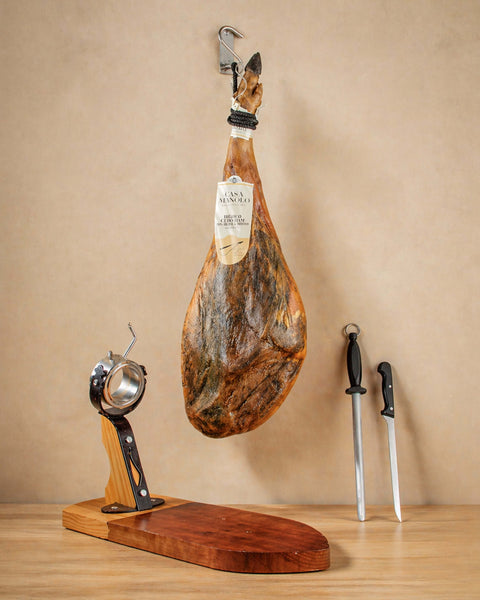
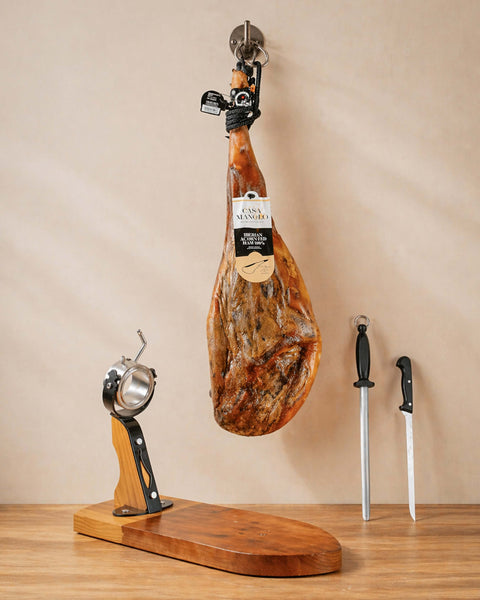
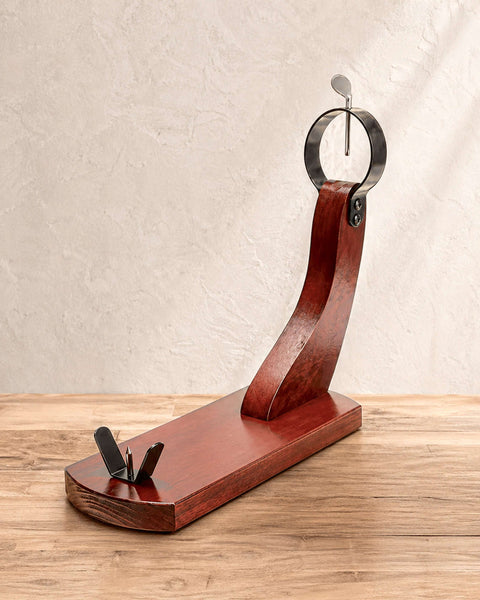
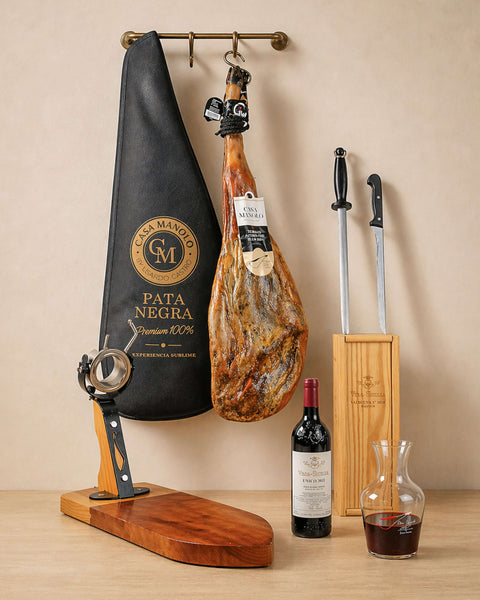
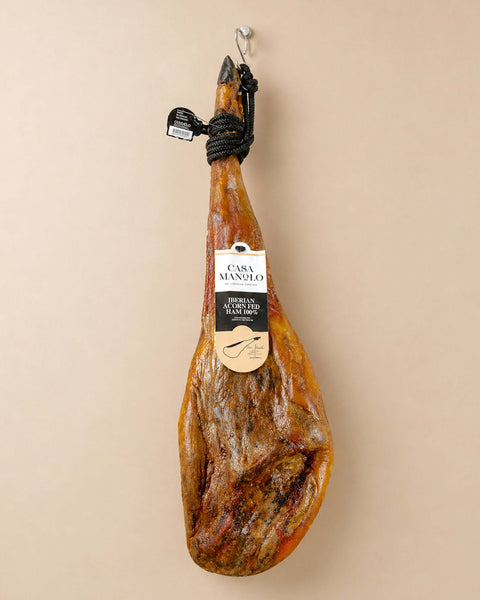
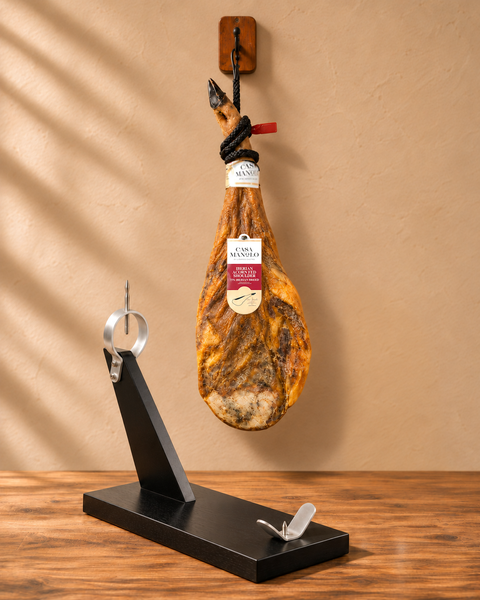
A purpose-built stand, suitable knife set and whole-leg jamón set match the equipment and format discussed in this guide.
 Premium Ham Stand - Rotating
 Ham Slicing Knife Set
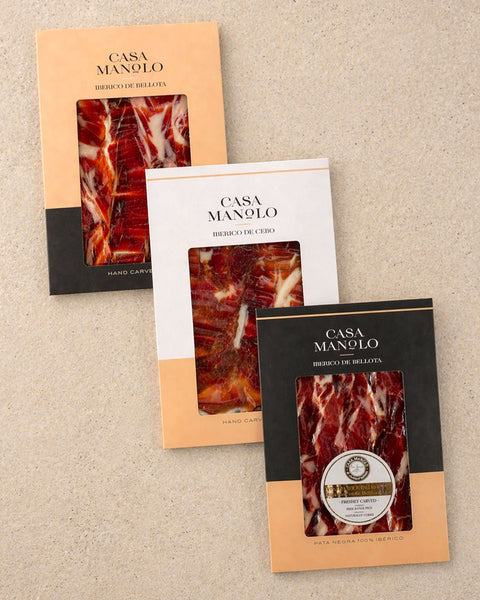
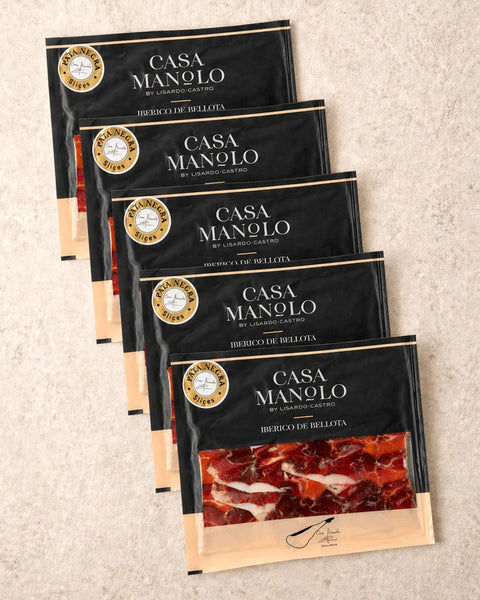
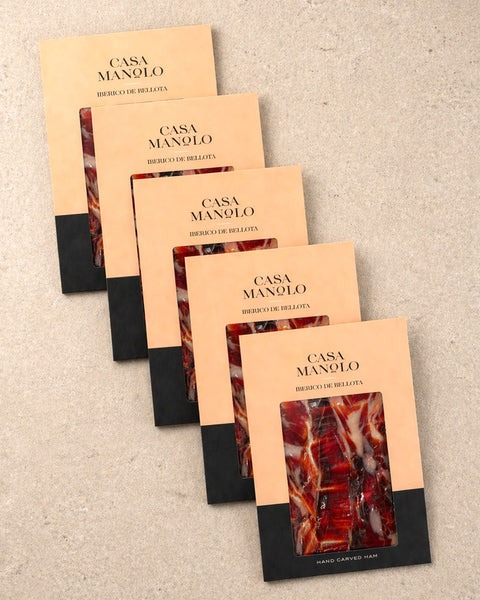
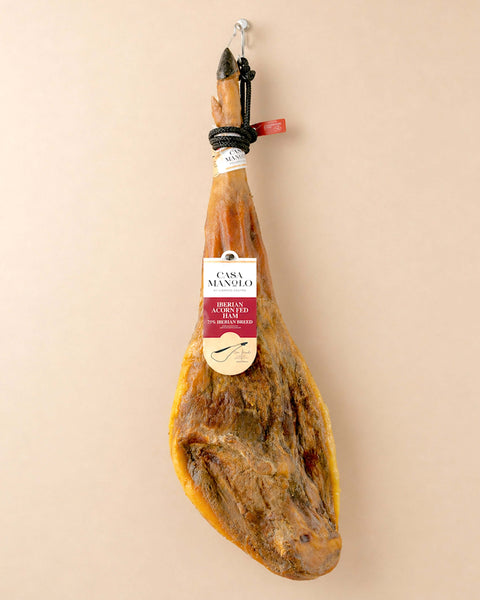
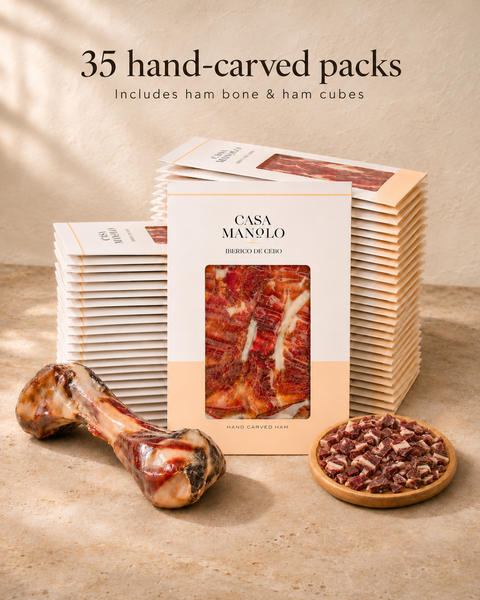
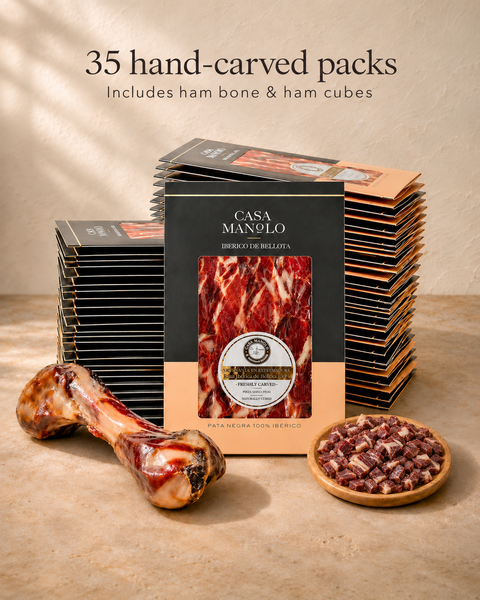
 Iberico Bellota Ham Set
Plan the first cut
Know which side is facing up and where the knife will travel. Slow, shallow strokes are safer than force.
Decide the working side and intended service period using reliable product and equipment guidance. Mark the area that will be opened and prepare the correct trimming tool separately from the long slicing knife. Planning prevents impulsive deep cuts that create an uneven surface or send the blade towards the supporting hand.
Cover and store correctly
When the session ends, protect the cut face and store the jamón according to its instructions.
At the end, stop while there is still good light and attention. Clean and store tools safely, protect the exposed surface as instructed and keep the area inaccessible to children and pets. Note any loosening in the stand so it can be corrected before the next session, not during it.
The pre-carving safety check
Confirm that the base is stable, the jamón is secured, the working area is bright and the route to the plate is clear. Keep the free hand and every bystander behind the cutting direction. Use protective equipment where recommended, and keep a separate cloth for handles so fat never turns grip surfaces slippery.
Make the first movement without contacting the ham: adopt the stance, trace the knife path and check that elbow and wrist have room. If the motion crosses a glass, wall or guest area, reposition the stand. This rehearsal takes seconds and often exposes a poor setup before a sharp blade is involved.
Build a safe carving zone before mounting the ham
Choose a low-traffic surface with enough depth for the stand, the carver’s arms and a receiving plate. The base must sit flat without rocking. Keep children, pets, glasses and serving dishes outside the working arc of the knife, and make sure the light falls across the cutting surface rather than behind it.
Mount and tighten the piece according to the stand manufacturer’s instructions, then test stability with both hands before the knife appears. Stop and retighten if the ham moves. Carving is not a performance to continue through a loose fitting; secure equipment and a clear pause are part of good service.
Stand questions
Can I improvise a support?
No. Use a stable purpose-built holder.
Should the knife be very sharp?
A suitable sharp knife gives more control than forcing a blunt blade; handle and store it safely.
What if the leg moves?
Stop immediately and tighten or reposition the stand before continuing.
The short answer
Place the stand on a solid surface, secure every fixing and keep hands and people out of the blade path.