A jamón knife is long and flexible so it can make controlled thin slices. Those qualities also demand attention: a moving leg, blunt blade or hand in the cutting path is dangerous.
Set the stand first, keep strokes short and never slice towards the free hand.
| Element | Good practice | Stop if |
|---|---|---|
| Grip | Firm, relaxed hand | Handle feels slippery. |
| Angle | Blade nearly parallel to surface | Tip points toward free hand. |
| Stroke | Short and controlled | Leg or stand moves. |
On a small screen, swipe or scroll across to compare.
Stability comes first
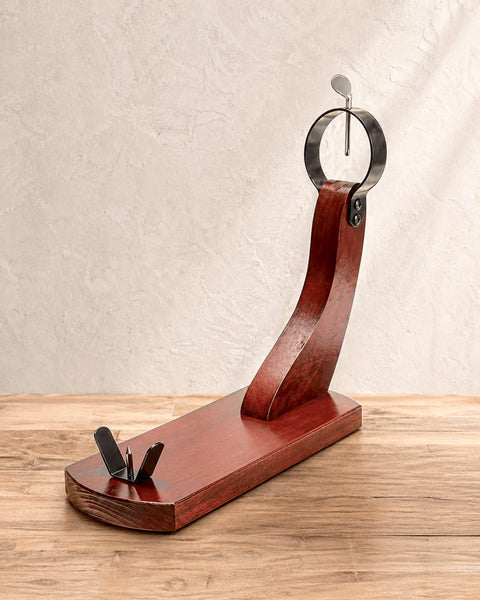
Tighten the holder and test it before touching the knife.
A secure stand, dry handle and clear work area matter more than slicing speed. Test the mount before every session and stop if the leg moves. Hold the knife without a clenched fist, keep the wrist aligned and use the grip recommended by the manufacturer or qualified instruction.
Keep the free hand behind
Use tongs or reposition rather than reaching ahead of the blade.
The supporting hand must remain behind the blade path. Use tongs or reposition the piece rather than reaching in front to steady a slice. Protective gloves or guards may be appropriate, but they do not make an unstable stand or poor direction safe. Pause whenever a guest approaches the carving area.
Knife-safety check
- Stand secure.
- Blade suitable and sharp.
- Hands dry.
- Free hand behind blade.
- Guests outside work zone.
Use purpose-built equipment
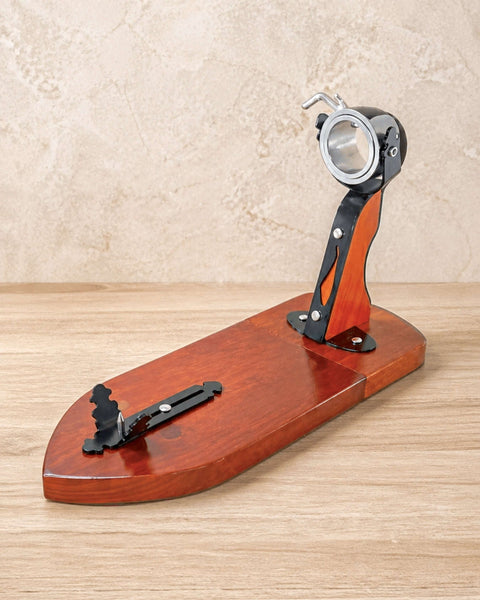
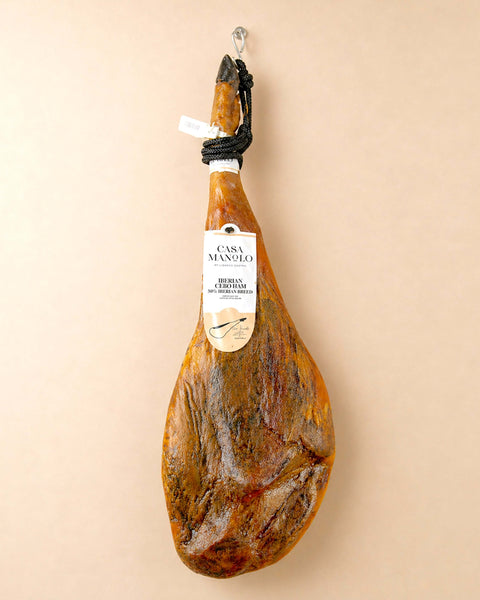
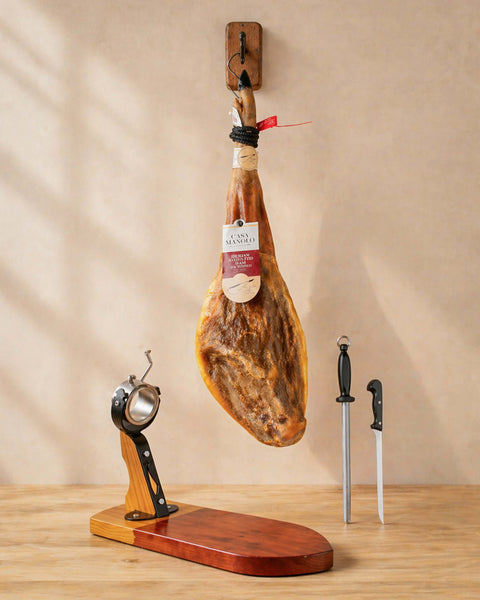
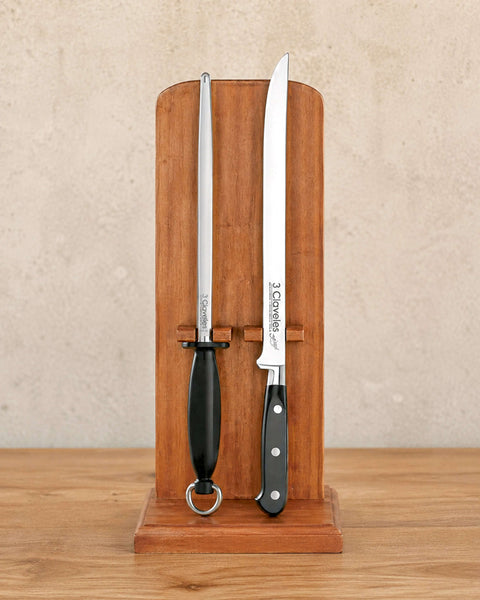
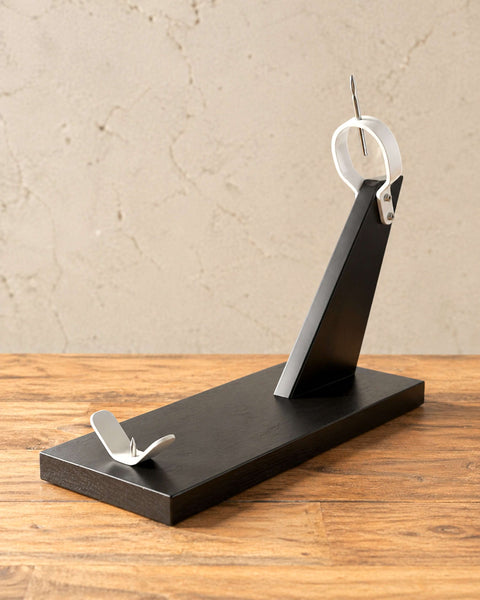
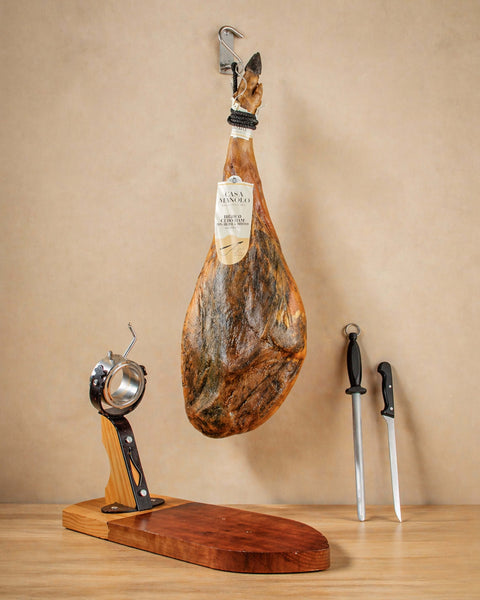
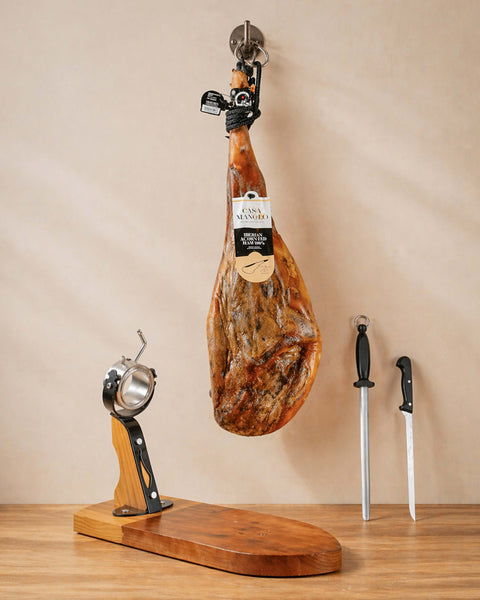
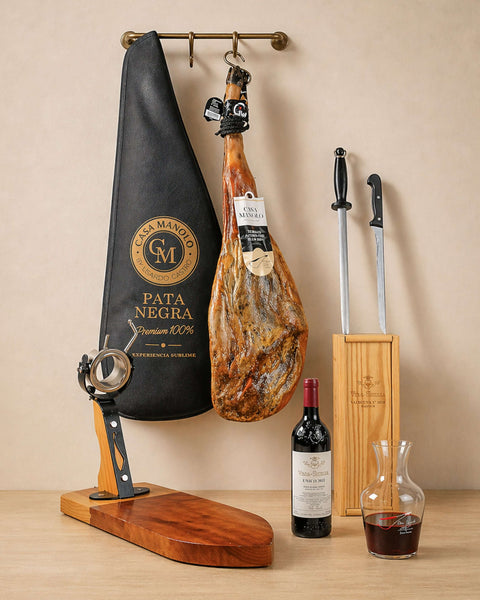
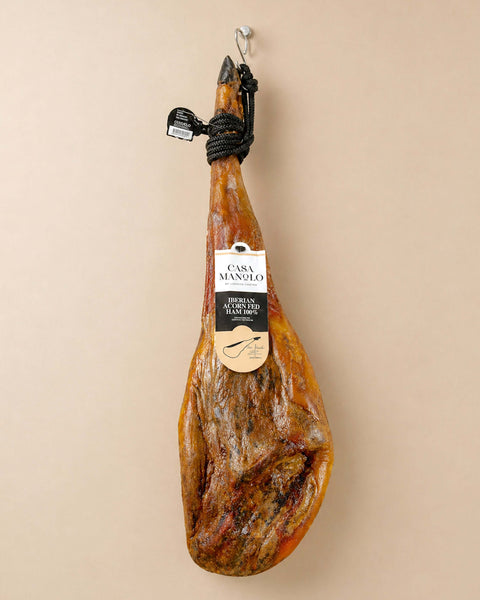
A suitable knife, secure rotating stand and whole-leg jamón set match the carving task described in this guide.
 Ham Slicing Knife Set
 Premium Ham Stand - Rotating
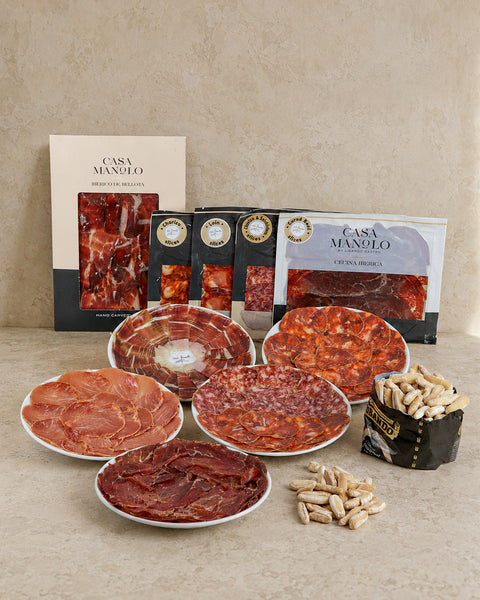
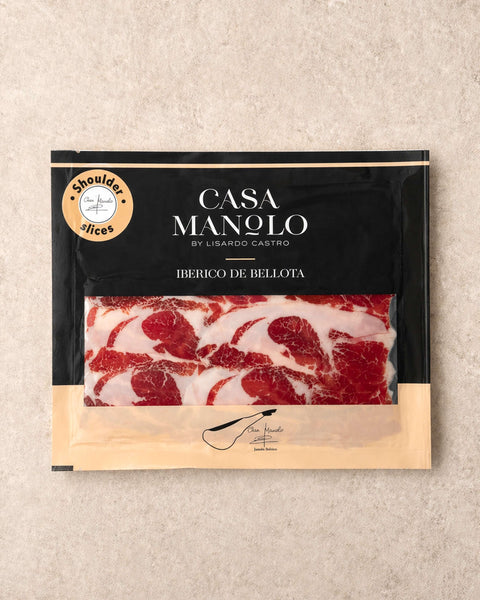
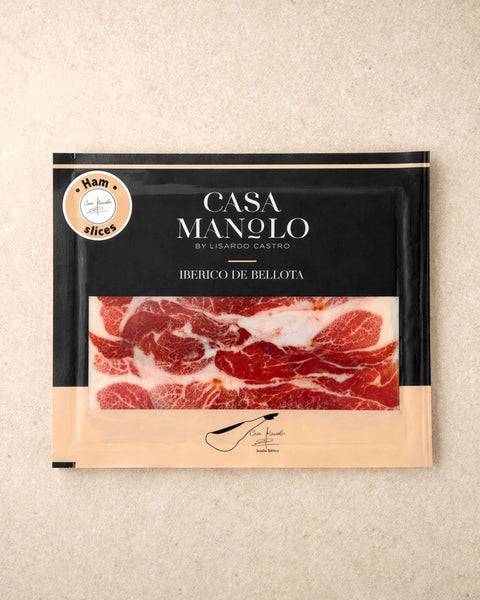
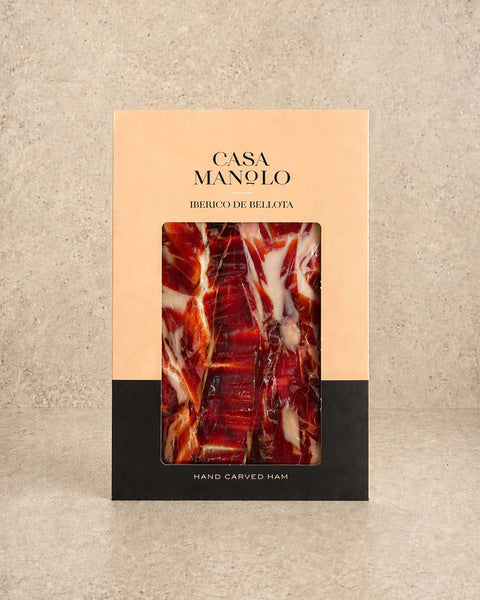
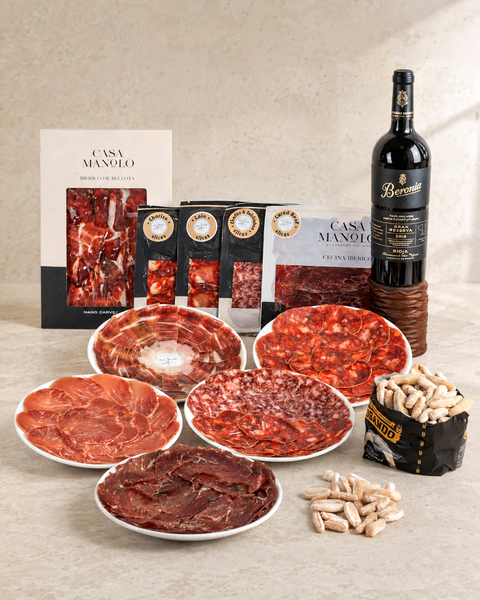
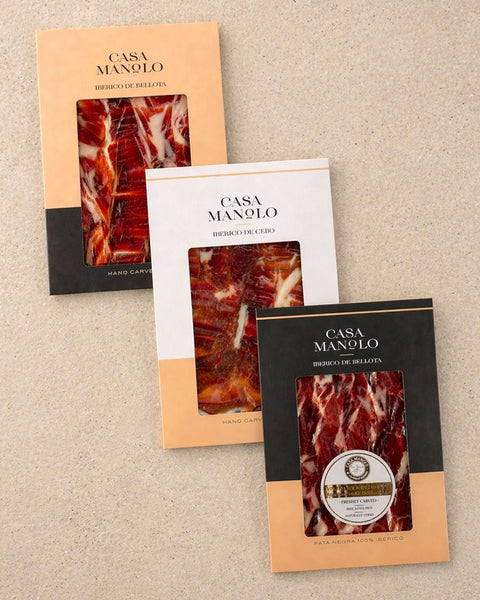
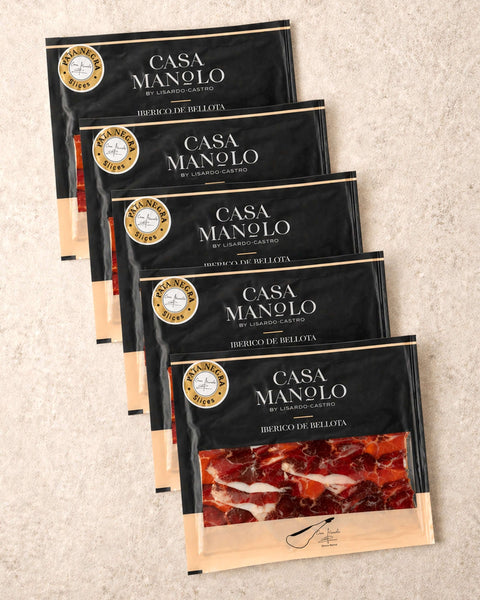
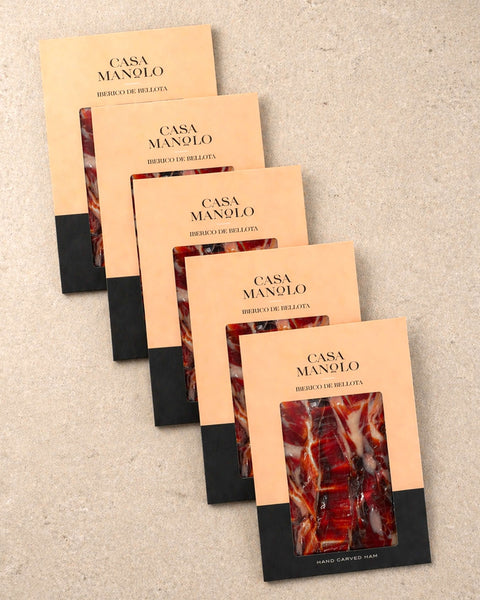
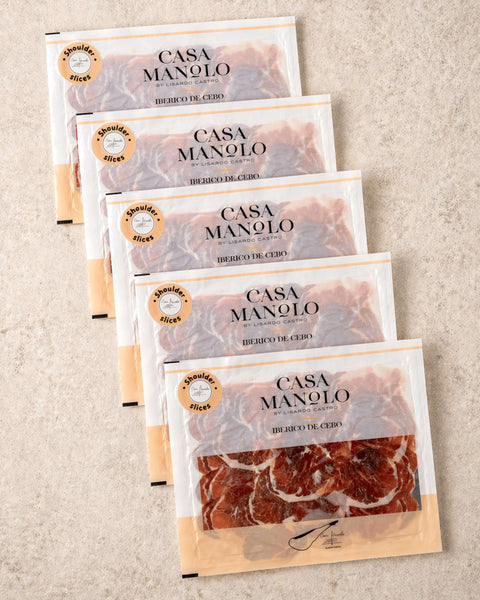
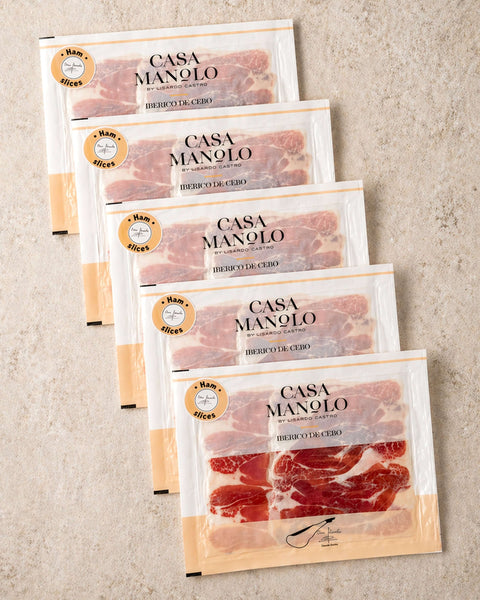
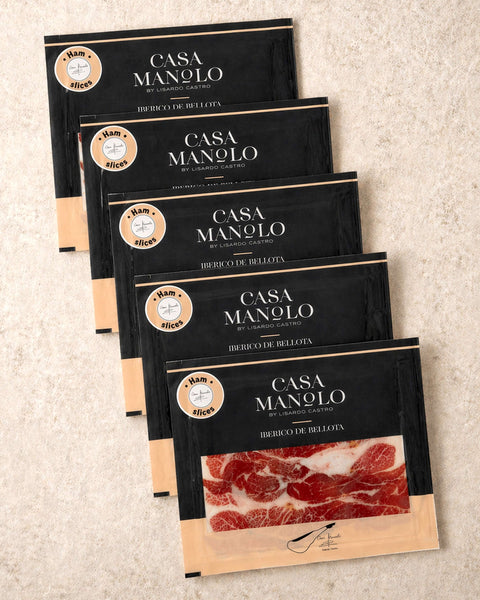
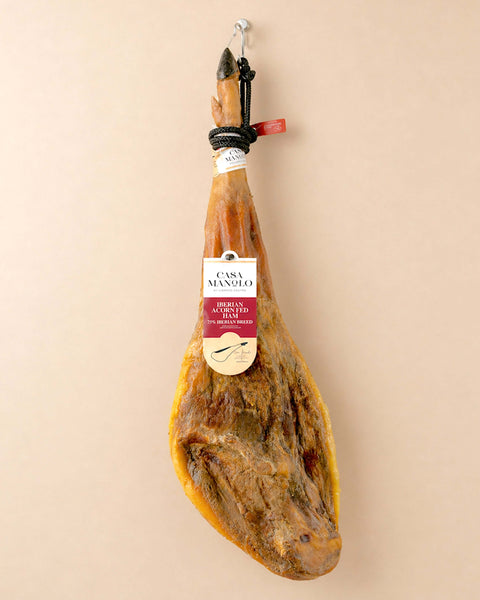
 Iberico Bellota Ham Set
Flatten the working surface
Uneven carving creates ridges and encourages awkward angles. Correct gradually.
Keep the active surface broad and level through shallow, parallel strokes. When ridges appear, correct them gradually with the appropriate tool rather than angling the long slicing knife steeply into the meat. An uneven surface encourages force and can make the knife jump.
Protect the knife
Clean and store it separately according to manufacturer guidance.
Wash, dry and store the knife exactly as its maker directs. A long flexible blade should not be loose in a drawer or left on the board under a cloth. Inspect the handle and blade before use, and arrange professional sharpening when needed rather than compensating for a dull edge with pressure.
Practise the motion before carving
With the ham securely mounted and the blade still covered or set aside, take the stance you intend to use. Check foot position, elbow space, lighting and the direction of travel. Then place the knife and rehearse a short, slow stroke without attempting a paper-thin slice immediately.
Work in brief sessions and transfer each slice to a waiting plate. Fat on the handle, fatigue and conversation all reduce control. If the angle becomes awkward near a bone or change in shape, stop and use appropriate guidance rather than improvising. Good carving is controlled and repeatable; speed is not a quality measure.
Practise control before chasing thinness
A long flexible jamón knife is designed for controlled slicing, not force. Keep the wrist neutral, use a secure stance and make smooth strokes away from the supporting hand. The ham must be firmly mounted, and a protective glove or guard should be used where appropriate to the equipment and instruction.
Begin with a short, well-lit working area and stop whenever the surface becomes uneven or the stand shifts. Thinness is not worth an unsafe angle. If technique is unfamiliar, follow the knife and stand manufacturers’ guidance or learn from a qualified carver before serving a crowd.
Keep a separate small utility knife for trimming and the long slicing knife for the flat cutting motion it is designed to perform. Wipe handles if they become greasy and return the blade to a safe position whenever attention moves to the plate or to a guest.
Knife questions
Can I use a chef’s knife?
A purpose-built jamón knife is designed for long thin slices; use appropriate equipment.
Long strokes?
Begin with short controlled movements.
What if the blade slips?
Stop, reset the stand and your grip, and never catch the blade.
The short answer
Secure the jamón, keep the free hand behind the blade and use short, shallow strokes with purpose-built equipment.