Choosing Spanish wine is easier when you separate three decisions: the style you enjoy, the food you are serving and the occasion. Region names are useful clues, but they are not complete tasting notes.
Use this guide to narrow the shelf. For detailed food matches, our separate pairing guide starts with what is on the plate.
| If you usually enjoy… | Explore… | What to check |
|---|---|---|
| Fresh, dry whites | Albariño | Producer notes, freshness and any lees ageing |
| Fruit and spice in a red | Red Rioja | Body, tannins and oak influence |
| A fuller red for substantial food | Ribera del Duero | The specific bottle’s style and strength |
| Dry sparkling wine | Cava | Sweetness indication and producer notes |
| A savoury aperitif | Fino or Manzanilla | Choose a dry style; not every sherry is dry |
On a small screen, swipe or scroll across to compare.
Start with a style you already like
Think about the last bottle you enjoyed. Was it crisp, soft, fruity, savoury or full-bodied? That description is often a better starting point than choosing the oldest vintage or the most expensive label.
If you prefer lighter wines, do not feel obliged to buy a powerful red for a Spanish meal. A white or sparkling wine may fit both your taste and the food.
Rioja and Ribera del Duero: compare bottles, not reputations
For red Rioja, look for the balance of fruit, tannin and oak described by the producer. It can be a useful place to start for cheese and charcuterie, but the region produces a broad range of styles.
Ribera del Duero is worth exploring when you enjoy more structure or are serving substantial food. There is overlap between regions, so avoid assuming every Ribera is bigger than every Rioja. The individual wine matters.
What Crianza and Reserva do—and do not—tell you
These are regulated ageing terms within Rioja, rather than simple promises that one bottle will suit you better. They help describe how the wine was matured, but do not replace information about the producer and style.
A more mature wine may be an interesting gift for someone who enjoys it. For a casual tapas evening, a fresher style can be just as satisfying. The Rioja classification guide explains the categories.
Explore three different wine styles
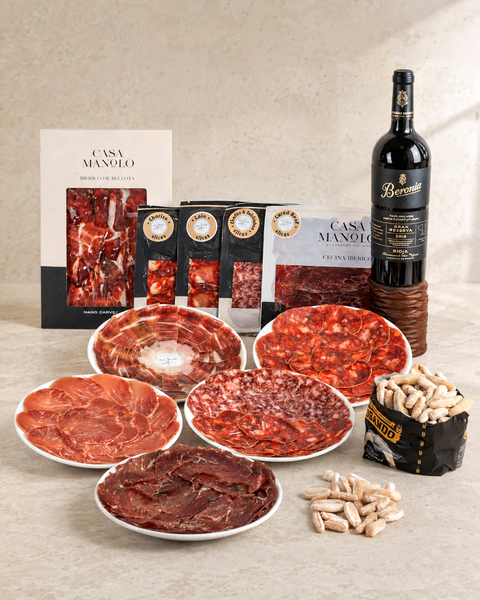
 Beronia Rioja Reserva
 Casa Manolo Albariño (Limited Edition)
 Tio Pepe Fino Sherry
Albariño and Cava: two different ways to bring freshness
Albariño is a white grape closely associated with Rías Baixas. It is a useful starting point if you enjoy fresh whites with seafood and lighter food, although producers make different styles.
Cava brings bubbles to the decision. Check the sweetness indication and tasting description if you want a dry bottle for savoury tapas. Choose it because you enjoy sparkling wine, rather than treating it as a compulsory celebration purchase.
Sherry: choose the style first
Fino and Manzanilla are dry styles that can work beautifully as aperitifs with savoury food. They are very different from sweet Pedro Ximénez. Buying “a sherry” without checking the style is like buying “a cheese” without asking which one.
Start with a small pour alongside food and follow the producer’s storage advice after opening. Explore the current wine and sherry range for individual descriptions.
Buying for a gift or a mixed group
For a gift, begin with what the recipient already enjoys, then choose a bottle with a clear connection to the food you are including. Check that alcohol is welcome before adding it to a hamper.
For a mixed table, two contrasting styles often help more than a single expensive bottle. A fresh white or sparkling choice alongside a red gives people room to choose.
A quick check before you choose
Is Reserva automatically the best choice?
No. Ageing terms provide useful information, but suitability depends on the particular wine, your taste and the food.
Is all sherry sweet?
No. Fino and Manzanilla are dry styles; Pedro Ximénez is a very different, sweet style.
Which bottle should I choose if I am unsure?
Start with a style you already enjoy and read the individual description. For a mixed group, offer two contrasting options.