You do not need expert vocabulary to enjoy a cheese tasting. A few contrasting wedges, plain bread and a moment to pay attention can turn an ordinary cheese plate into a conversation.
Choose three Manchegos with clearly different maturity descriptions. The goal is to discover what you enjoy, not to decide which age must be best.
| What to notice | A question to ask | Simple words to try |
|---|---|---|
| Texture | How does it break and feel? | Supple, firm, crumbly |
| Flavour | What stands out first? | Milky, nutty, savoury |
| Finish | What remains after the bite? | Gentle, lingering, sharp |
| Preference | When would you enjoy it? | Lunch, sharing board, end of a meal |
On a small screen, swipe or scroll across to compare.
Choose a clear comparison
Start with semi-cured, cured and extra-matured wedges, checking the individual product descriptions. Avoid adding truffle or rosemary versions to the first round if you want to concentrate on maturity: those added flavours create another variable.
You can explore flavoured cheeses afterwards as a separate tasting. Keeping the first comparison simple makes the differences easier to notice.
Prepare a small, orderly board
Label the wedges or use numbered cards so everyone can remember what they tasted. Cut a modest piece of each per person and keep the remaining cheese stored as the packaging directs.
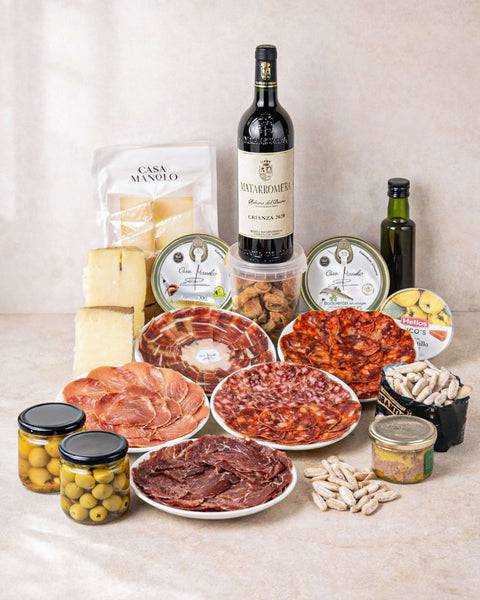
Set out water and plain bread or picos. Keep quince paste and other accompaniments to one side until after the first taste, so sweetness does not dominate the comparison.
Taste, then talk
Begin with the cheese described as the mildest or youngest and move towards the more mature option. Notice the texture before searching for elaborate flavour descriptions. A simple comment such as ‘firmer and more savoury’ is enough.
Ask everyone to choose a favourite before revealing their own view. Different preferences are part of the fun; there is no need to turn the tasting into a test.
Build your three-cheese comparison
 Manchego Semi-Cured Cheese Wedge
 Manchego Cured Cheese Wedge
 Manchego Cheese Wedge - Extra-Matured
Try one accompaniment at a time
Return to the same three cheeses with a small piece of membrillo. Then, if you like, try an olive or a piquillo pepper. Changing one element at a time helps you notice whether it complements the cheese or overwhelms it.
Make a short note of the combination you would buy again. A tasting is most useful when it helps you build a cheese board you actually want to eat.
A quick check before you choose
Must I use three cheeses?
No. Two contrasting wedges can make an enjoyable comparison, especially for a smaller household. Choose a manageable amount rather than a crowded board.
Should I add wine?
Only if you want to. Water and plain bread keep the focus on the cheese. If you add wine, taste the cheeses on their own first.